
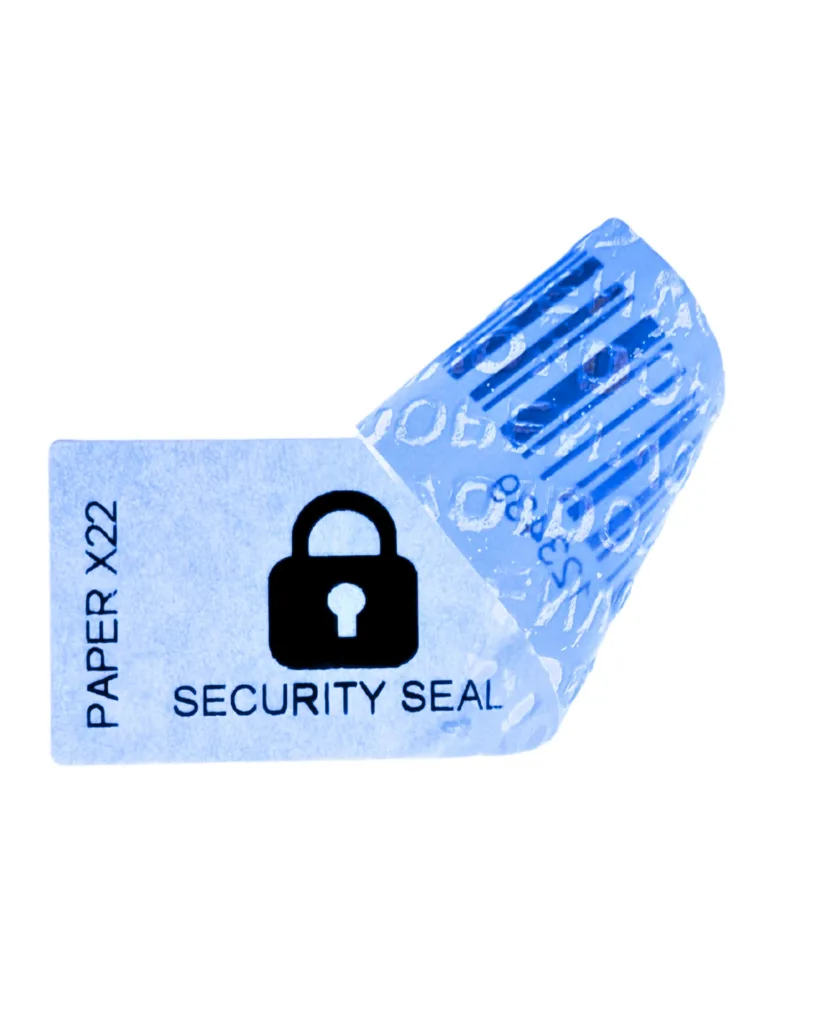
TamperTech’s paper-based non-residue VOID label solution has existed within our technical range for a while. Until now, it has mainly been discussed directly with known distributors and project contacts; we are now making it visible on the site so buyers, packaging teams and distributors can find it when they need a no-transfer paper label option.
The product is a paper-based face label for applications where a pack, tote, bag or returnable item needs visible opening evidence, but the receiving surface should not be left with adhesive transfer after the label is lifted.
It sits alongside our established film non-residue security labels and paper tamper-evident label work. The important difference is the brief: clean-surface handling, paper-based face material and a visible VOID/security-message effect when removal is attempted.

What is a non-residue paper VOID label?
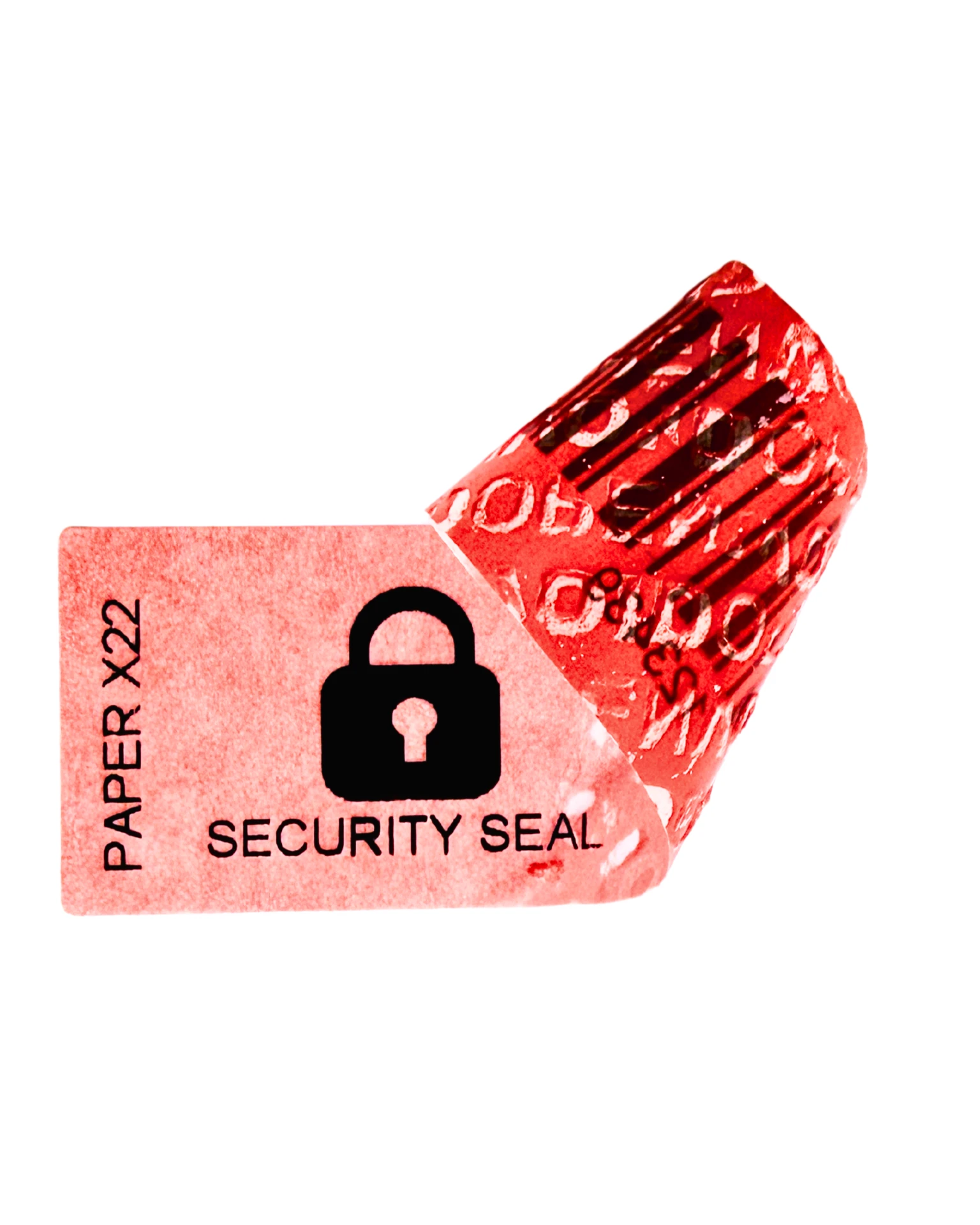
A non-residue paper VOID label is a tamper-evident security label designed to reveal a visible message effect when lifted, while keeping adhesive transfer away from the receiving surface. In practical terms, it is for people searching for paper tamper evident labels, no-transfer labels, residue-free security labels or VOID security labels where a standard permanent construction may be too aggressive.
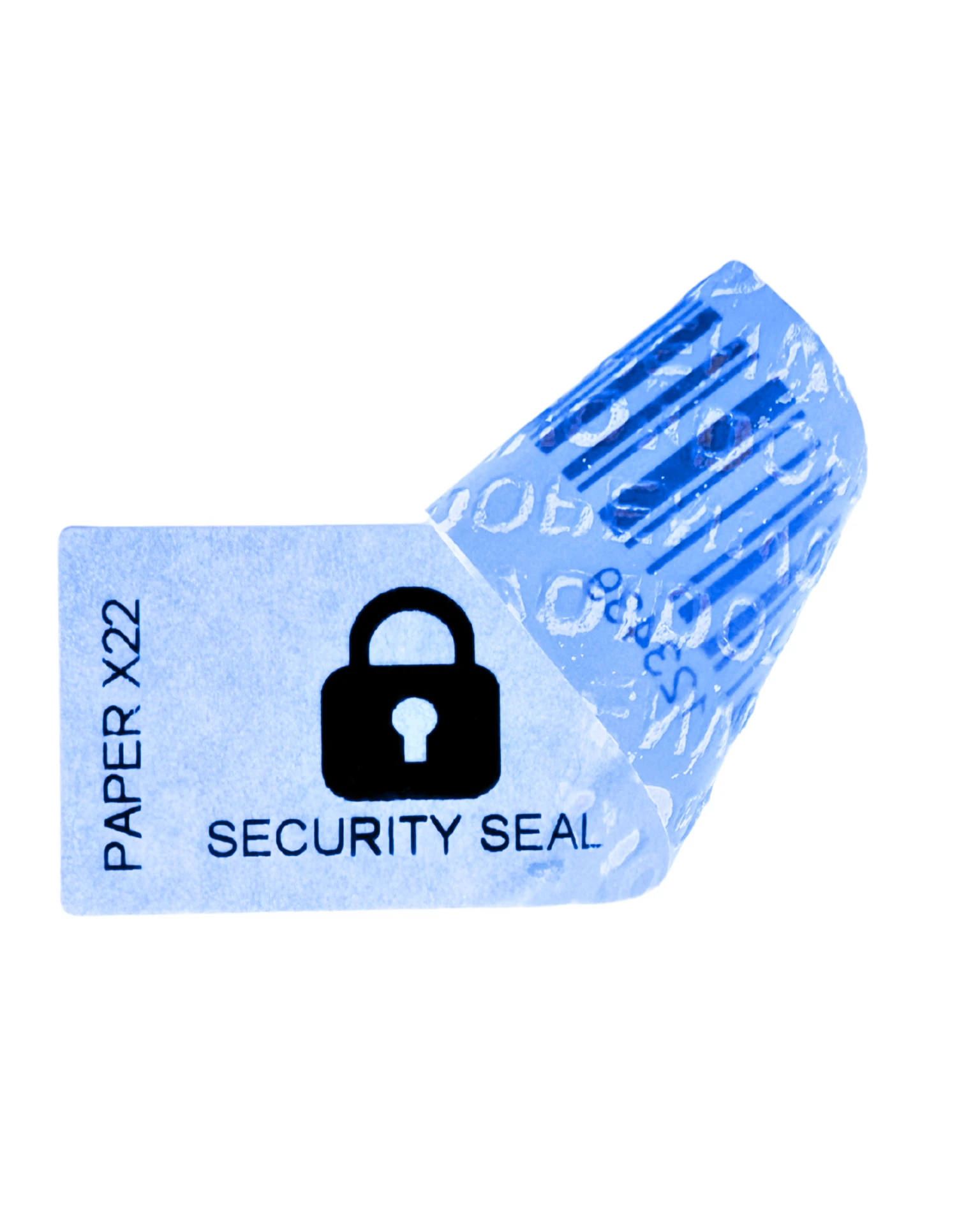
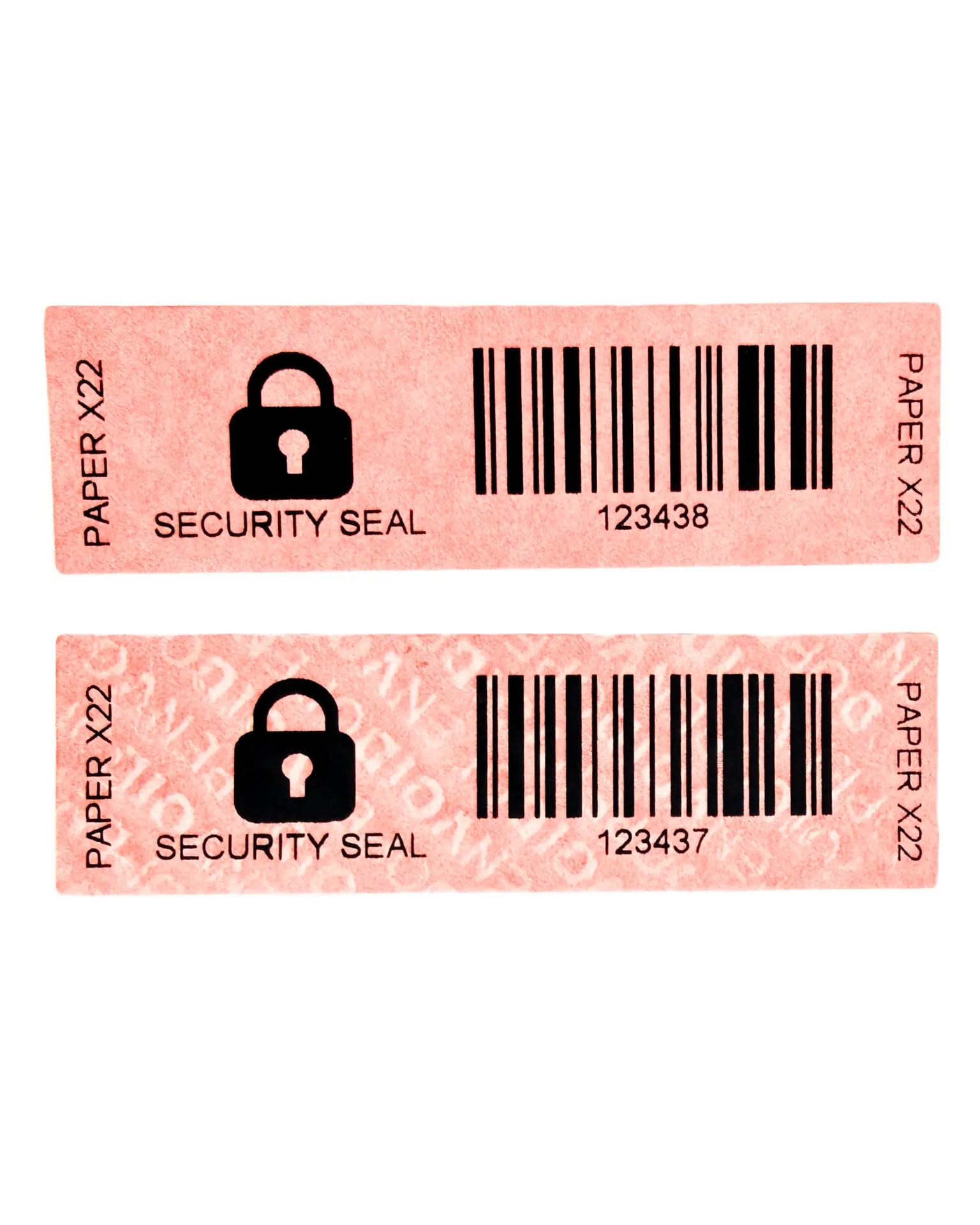
The revealed message does not have to be generic VOID. Depending on the project, artwork can be developed around SECURITY SEAL wording, a lock icon, serial numbering, barcodes, colour variants and custom security-message behaviour. The construction still has to be tested on the actual surface before a specification is confirmed.
Why we are sharing it publicly now
Clean-removal tamper evidence is no longer only a niche distributor conversation. More teams are trying to secure reusable packaging, equipment and containers, internal custody processes and controlled handover points without making the pack harder to reuse or inspect.
We have therefore added a dedicated product page so buyers can see the application fit, compare it with permanent paper labels and film non-residue labels, and route real samples into the Security Lab for testing.
View the non-residue paper VOID tamper-evident label page.
Where this solution helps
The best use cases are situations where a visible opening check matters and the surface underneath goes back into service. Typical briefs include:
- Reusable totes, trays and returnable cases where adhesive residue would build up and affect repeat use.
- Airline catering trolleys and galley equipment that are sealed, opened, washed and returned to service repeatedly.
- Aircraft access points and hatches, always subject to your own testing and approval process before adoption.
- Reusable transit containers, crates, roll cages and stillages moving between sites under custody checks.
- Cabinets, lockers and controlled storage where interference between scheduled checks has to be visible.
- Controlled handover and inspection points using serial numbers, barcodes or documented seal records.
How it differs from permanent paper security labels
Permanent paper security labels are usually specified where a strong bond is required and the receiving surface can accept an aggressive removal event. Depending on the construction, removal may reveal a dry-peel security message, fibre tear, or a combined effect.
Non-residue paper labels solve a different problem. They are specified when the buyer wants visible evidence that the seal has been lifted, but does not want adhesive transfer left behind on the pack, tote, tray, bag or item.
| Brief | Likely route | What to test |
|---|---|---|
| Strong bond and visible removal evidence | Permanent paper or film security label | Surface strength, message reveal, fibre tear if required |
| Visible opening evidence and clean receiving surface | Non-residue paper VOID label | Surface texture, dwell time, lift behaviour, residue result |
| Clean-removal tamper evidence with film handling properties | Film non-residue label | Durability, transparency, environment and application method |
Why the real pack matters
No-transfer label performance is application-led. A reusable plastic tote, powder-coated or stainless trolley, painted panel, coated carton or textured board can all behave differently. Temperature, moisture, pressure, time on surface and how the label is removed also change the result.
That is why TamperTech does not treat a website description as a final specification. The fastest route is to send the real item or surface — tote, tray, trolley part, panel or pack — so the Security Lab can test the behaviour and recommend a construction. Labels can also be supplied printable for inkjet, flexographic, thermal transfer or direct thermal printing where your team overprints its own data.
Common specification questions
Can it be supplied with numbering and barcodes?
Yes. The current samples show serial numbering and barcode artwork. The final specification can include operational identifiers, brand artwork, colour variants and security wording.
Is it the same as a plastic non-residue label?
No. It is aimed at a similar clean-removal problem, but with a paper-based face label. A film construction may still be the better choice where handling strength, transparency, environmental exposure or machine application requires it.
Can it be called plastic-free?
That claim depends on the full construction, not just the face material. We can support paper-based and plastic-reduction briefs, but any full plastic-free, recycling or regulated-use claim should be confirmed against the exact construction and application.
What surfaces does it work on?
It must be tested against the real surface. Send the pack or surface sample, especially if the surface is textured, coated, chilled, damp, reused or high value.
For distributors and buyers who already needed this
If you have previously asked us about no-transfer paper security labels, paper VOID labels, residue-free paper labels or reusable-packaging security labels, this is the public product route to use. It gives your team and customers a clear page to review while keeping specification decisions tied to real-pack testing.
Next step: send us the pack
If the problem is adhesive transfer, surface cleanliness, reuse, returns handling or a clean receipt check, send us the real pack or surface. The Security Lab can test the application and advise whether the paper non-residue VOID label is the right route, or whether a permanent paper, film non-residue or alternative tamper-evident construction is more appropriate.
SEND US THE PACK — send the real item — tote, tray, trolley part, panel or pack — so the Security Lab can test clean removal and visible VOID/security-message behaviour before a specification is confirmed.