
The short answer
Tamper evident means the pack shows interference. A label, seal or tape is built so it cannot be removed and put back without leaving a visible mark — a VOID message, a torn face, or a residue pattern. You can see, on inspection, that something happened.
Tamper proof implies interference cannot happen. In packaging that is not achievable: given enough time, tools and motive, any seal or closure can be defeated. So “tamper proof” is not a claim we make about our products. It is simply the phrase most people type when they mean tamper evident.
- Tamper evident — detects and displays interference. Verified by a human or a scan at each handover. This is what security labels and tapes actually deliver.
- Tamper proof — implies prevention. Prevention comes from locks, cages, enclosures and custody procedures, not from an adhesive.
The same requirement also gets searched as anti tamper labels, anti tamper tape, security seals and do not tamper labels. All of them describe the job we call tamper evident.
If you already know the format: tamper evident labels · tamper evident tape · security bag tape · applications by industry. If the surface or the failure mode is the unknown, send us the pack and the problem.
How tamper evidence is produced
Tamper evident constructions are not designed to be impenetrable. Their job is to make removal irreversible and obvious. The common mechanisms:
- Destructive materials: the label or seal tears or breaks up on removal and cannot be lifted in one piece.
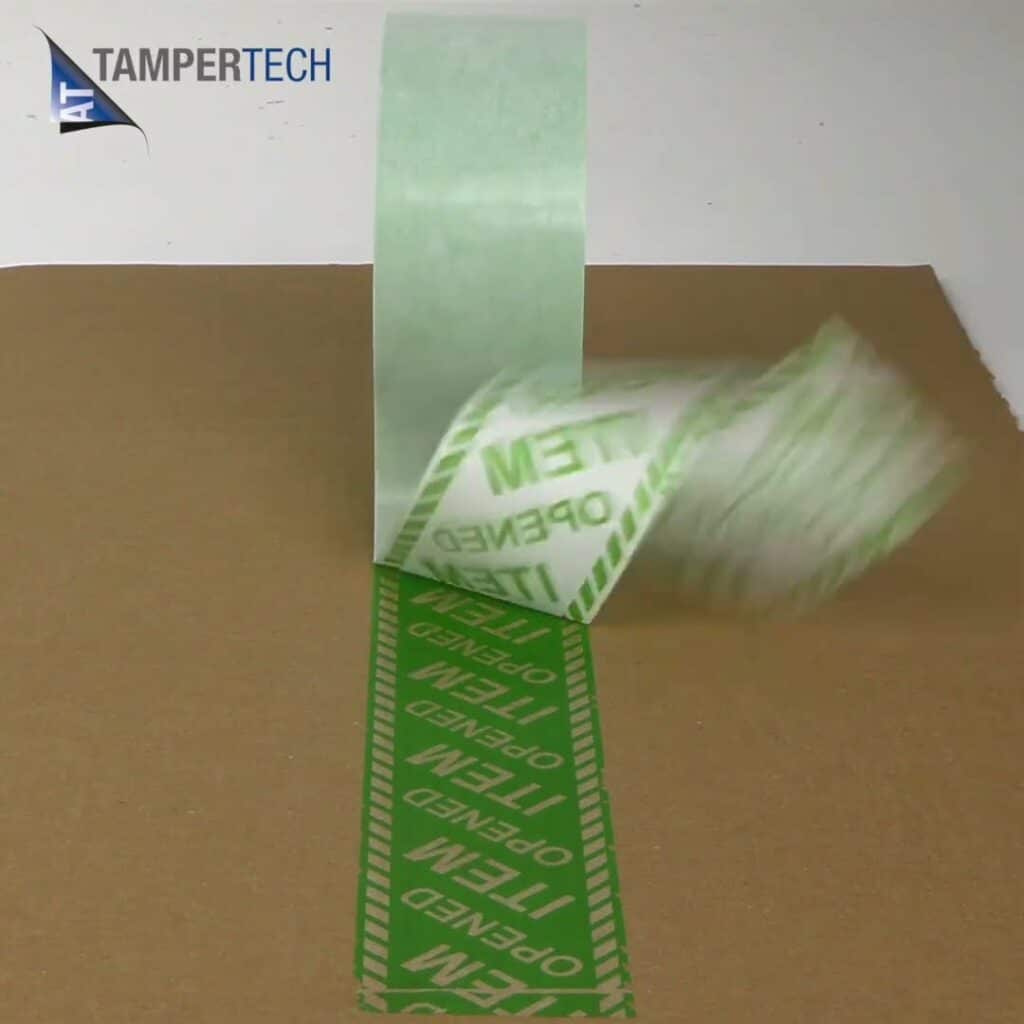
- Void patterns: a hidden message appears in the adhesive layer, on the label, on the surface, or both, once the seal is peeled.
- Residue and non-residue behaviour: some constructions deliberately leave adhesive residue as the evidence; non-residue polyester leaves the surface clean and carries the evidence on the label instead.
- Security printing and holographic layers: print that distorts or delaminates if the seal is disturbed, and is difficult to reproduce.
- Serial numbers and barcodes: a unique reference applied at dispatch and checked on receipt. This is the part that supports authentication and traceability.
Watch: what tamper evidence looks like when a label is removed 
Where the “tamper proof” idea breaks down
It is worth being precise about the limits, because they decide what else your process needs:
- A seal does not lock a container. If access must be prevented, that is a lock, a cage or a controlled cabinet.
- A seal does not tell you who opened the pack, only that it was opened. What you do with that evidence is a policy decision — see what a tamper-evident seal proves on a returned parcel.
- A seal does not authenticate the contents on its own. Authentication comes from the record — a serial or code applied at dispatch and checked on receipt.
- Evidence only counts if someone checks it. Unchecked seals produce no evidence at all.
Where risk is high, tamper evidence is normally combined with physical security and a documented check at each handover. The seal turns an unanswerable question into a documented one.
What tamper evidence gives you
- Deterrence: opportunistic interference and pilferage drop when interference will be visible.
- Confidence at the point of receipt: an intact seal is a fast, visual assurance for the person opening the pack.
- Support for documented checks: regulated sectors need a recorded integrity check at defined points; a sealed, serialised pack makes that check quick and auditable.
- Evidence after the event: a voided seal, torn face or residue pattern is concrete evidence for an investigation or a claim.
- Traceability: serialised seals tie a specific pack to a specific dispatch.
Where it is used
- Pharmaceutical and medical: sealed cartons, trolleys and cabinets where an integrity check is part of the procedure.
- Food and beverage: closure seals protecting against substitution and contamination in transit.
- Electronics and high value goods: box tape and labels applied at pack-out to show interference in transit.
- Cosmetics and personal care: closure seals guarding against substitution and refill.
- Cash, valuables and secure documents: sealed bags and serialised seals through the chain of custody.
- Cannabis and regulated retail: tamper evident labels supporting the sealing rules that apply to the category.
See tamper-evident applications by industry.
Which construction fits your job
- Permanent labels (paper and plastic): strong adhesion, evidence left on the surface. Use where the pack is not meant to be reopened. See the tamper evident label range.
- Non-residue labels (polyester): clear void evidence with a clean surface after removal. Use on finished, valuable or delicate surfaces. See non-residue labels.
- Tamper evident tape and box tape: applied on the carton seam at pack-out, in rolls, for volume dispatch. See the tamper evident tape range.
- Security bag tape: for converters and bag makers sealing security and courier bags. See the security bag tape range.
Specification is decided by three things: the surface it must stick to, the temperature and handling it will see, and whether the surface must be left clean on removal. Applied with enough pressure and dwell time, and actually checked at each handover, the seal does its job.
Getting it specified
If you know the construction you need, discuss your requirement. If the surface, the closure or the failure mode is the unknown, send us the pack and the problem and we will specify against it.