Aviation application

Aircraft Cabin Door Tamper Evident Labels

Sealing cabin doors and emergency exits so any access during turnaround, ground handling or a layover is visible at the next check.

An aircraft on the ground is accessed by cleaning, catering, engineering and handling teams. Between the last check and the next one, no one can say with certainty whether a door or exit has been opened.

A numbered non-residue seal across the door edge answers that question physically. Intact and matching means nothing has moved. Broken or renumbered means an exception, raised before the aircraft is accepted.
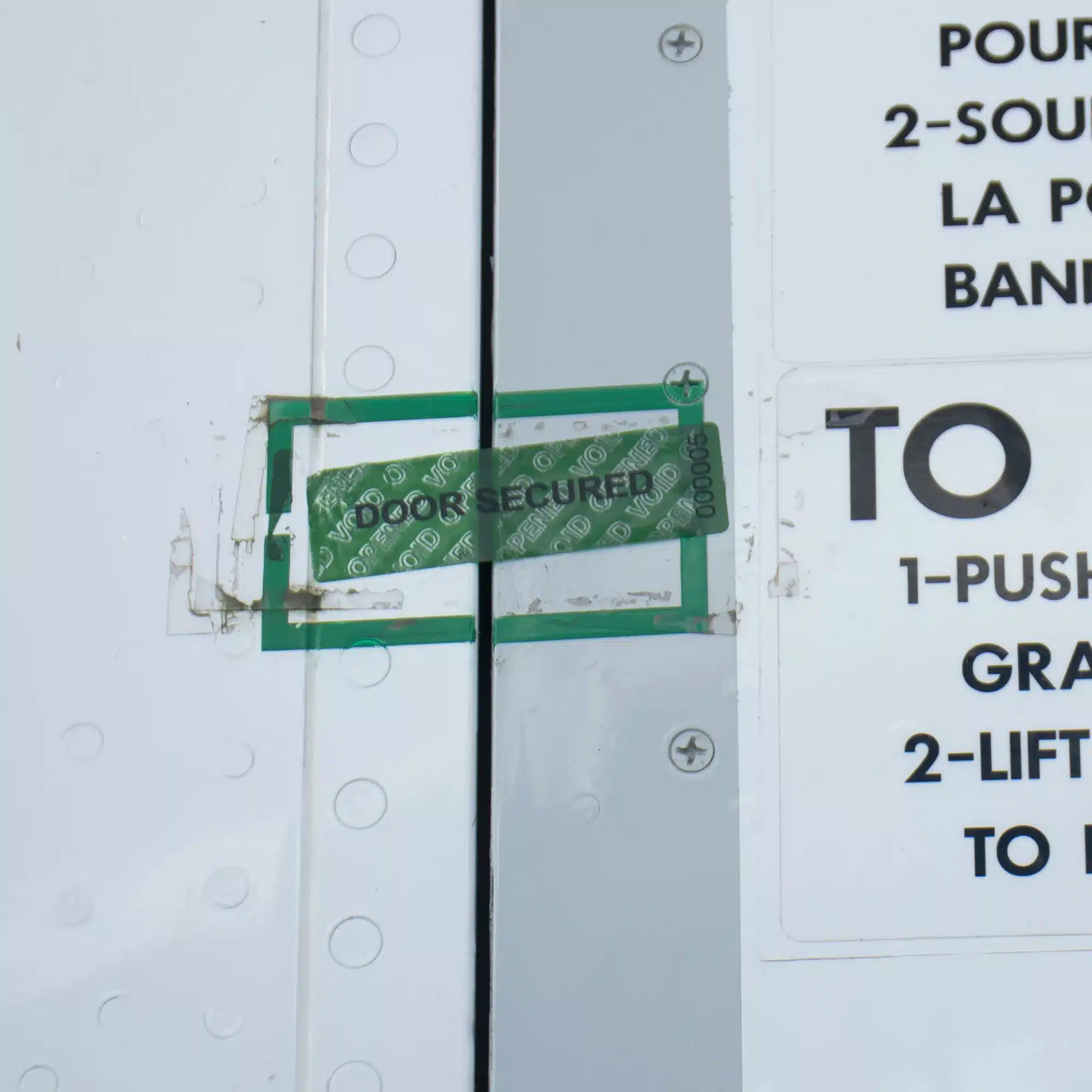
Tamper evident security label applied across an aircraft cabin door edge

What interference should reveal

Sealed, opened, evidenced

01

Sealed and recorded

The label is applied across the door or exit joint and its consecutive number is entered in the check record.

02

Door moved

Because the seal bridges the moving joint, the door cannot open without breaking it.

03

Evidence remains

The label voids and cannot be re-applied. Surfaces are left clean, so a new seal goes straight on.

Real evidence

Applied, and after the door is opened
Aircraft door secure label applied across the door joint
Applied across the joint so movement has to break the seal.
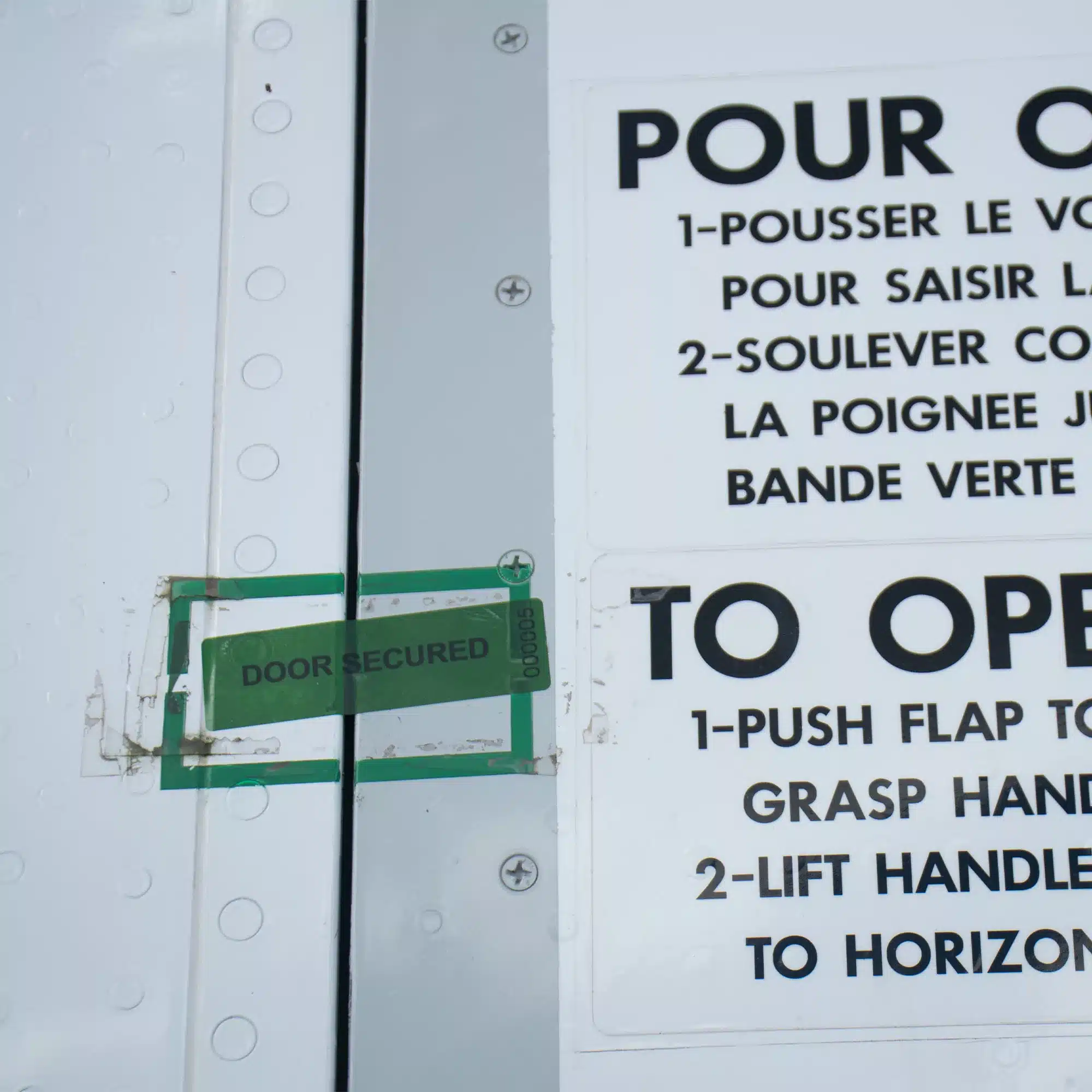
Aircraft door security label after the door has been opened
Once the door is opened the label is broken — there is no ambiguity to interpret.
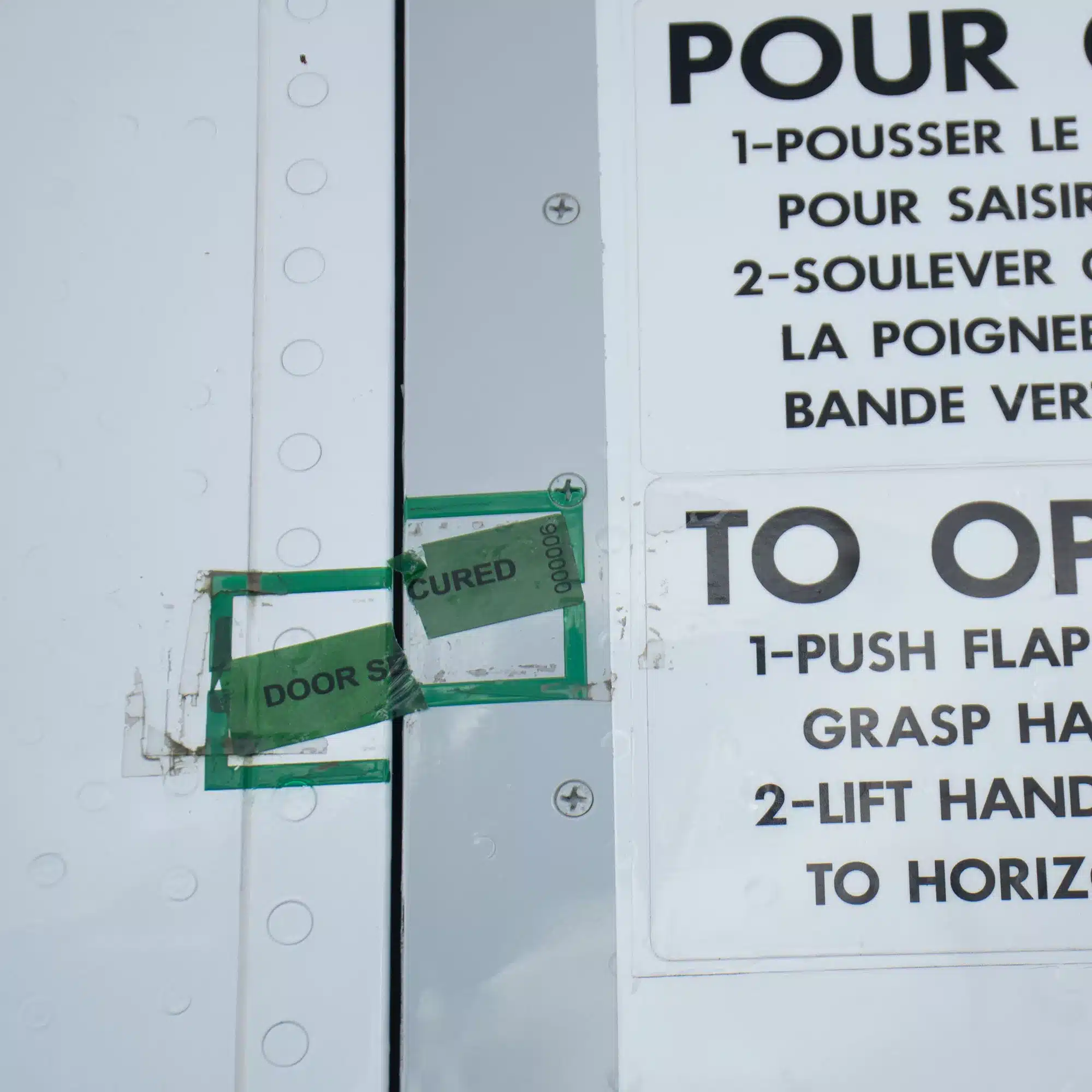
Aircraft door tamper evident label voided after opening
The voided label cannot be re-laid; a replacement carries a new number.

Product routes

Constructions used for this application

Non-residue labels

Chosen for aircraft interiors because they void within the label and leave the door surface clean, avoiding residue removal on a turnaround. Non-residue labels.

Security cuts

Cuts in the label mean it tears rather than lifting cleanly, so partial interference still registers.

Numbering and covert features

Consecutive numbers for the check record, plus UV or bespoke void text where an additional verification step is wanted. Custom labels.

Application and integration

Getting it onto the aircraft

Where to place the seal

Across the door or exit joint, on surfaces agreed with your engineering team. Placement must not obstruct door operation, placards or emergency egress — we supply formats to a size and position you have signed off.

Surfaces and removal

Cabin interiors are finished surfaces. Non-residue constructions are specified so a seal can be removed by hand without solvent or scraping, and the next seal applied immediately.

Recording checks

Each seal number is recorded against the aircraft, station and check. A new seal after an authorised opening is logged as a new number, keeping the trail continuous.

Approvals

Tamper evident seals support your own security and turnaround procedures. Where a seal is used on aircraft equipment, placement and materials should be confirmed with your engineering and regulatory teams before rollout.

Related

Where else this is used

Airline and aircraft

The full aviation application set.

Catering trolley seals

Sealing trolleys between the catering unit and the cabin.

Life vest seals

Sealing life vest stowages for fast pre-flight checks.

Useful guidance

Before you specify

Non-residue constructions

Void within the label and leave cabin surfaces clean on removal.

Custom tamper evident labels

Sizes, numbering, bespoke void text and UV features.

Label constructions explained

How non-residue, permanent and paper constructions differ.

Tell us which doors and exits you seal, the surfaces involved and your turnaround times.

You know what you need

Formats, constructions, numbering and volumes — talk it through with the team and get samples or a quotation.

You are not sure yet

Send us the pack or the problem. The Security Lab looks at the application and helps specify the right level of security.