
Application · Logistics
Tote Box Seals: Tamper-Evident Labels for Reusable Totes
Totes come back. The seal has to leave evidence without leaving residue.
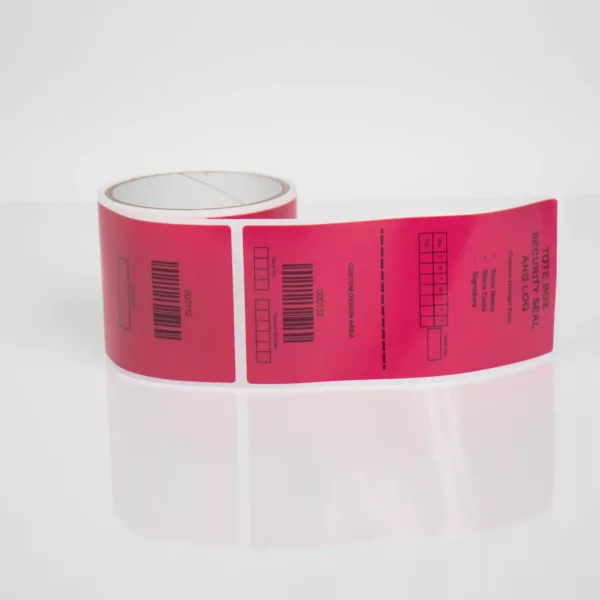
Reusable totes move stock, documents and returns through the same network many times. A non-residue tamper evident label seals the lid in one step, voids if it is lifted, and removes cleanly so the tote goes straight back into circulation.
Know what you need? Talk to our team. Not sure what will work? Send us the pack.
The problem
Why pull-tight seals fall short on reusable totes
A plastic seal locks a tote. It does not record what happened to it.
01
A replaced seal looks like an intact seal
Pull-tight seals can be cut and replaced with a similar seal. Unless numbers are recorded and checked at both ends, substitution is invisible.
02
Two steps instead of one
Many operations fit a seal and then a separate identification label. That is two handling steps per tote, and two chances to miss one.
03
Residue accumulates on the asset
Standard adhesive labels can leave residue that has to be cleaned off before reuse. Trip after trip that becomes cleaning work and a sealing surface that is harder to inspect.
Reusable assets
Adhesive evidence or a mechanical seal? An honest comparison
A reusable tote is an asset you own and pay to maintain, not packaging you throw away. That changes what a seal has to do: it has to evidence opening, identify the load where required, and come off again without creating a maintenance problem on the asset.
MECHANICAL SEALS
Physical robustness and a locking component
Pull-tight and plug seals give you a dedicated locking part and real physical strength through handling and transit. Where a load must be physically held closed, that is a legitimate advantage and we will say so.
ADHESIVE EVIDENCE
What our route actually offers
Ours is adhesive tamper evidence, identification and a clean-removal workflow: a single item that seals the lid, carries the number or barcode and shows that it was lifted — rather than a component that can be cut and replaced with a similar one.
CHOOSING
They are not mutually exclusive
Plenty of operations run a mechanical seal for physical closure and a numbered tamper evident label for evidence and reconciliation. The decision is what the goods-in check needs to be able to say.
The residue problem is an operational problem, not a life-expectancy claim.
Where standard adhesive labels are applied to the same asset trip after trip, residue can accumulate. That creates cleaning work, makes the sealing surface harder to inspect and adds to asset maintenance. A suitable non-residue construction is specified to avoid leaving adhesive on the sealed surface — provided the construction and the actual surface are suitable, which is established by testing on your own tote. We do not claim non-residue labels make a tote last longer.
What interference reveals
Sealed, lifted, evidence
The label bridges the lid to the body of the tote. Lifting it releases the void pattern across the label face.
If the seal is lifted or removed, the selected construction is designed to leave visible evidence of interference. Depending on the construction, this may be a VOID/security-message reveal, fibre damage, distortion or other visible evidence. We do not claim that a removed seal is physically impossible to reapply; the purpose is that removal or attempted replacement should leave evidence that can be checked as part of the tote inspection process. Performance must be confirmed on the actual substrate and application.
On non-residue tote constructions, the adhesive remains with the label rather than being deliberately left on the reusable surface, helping keep the asset clean where the selected construction and substrate are suitable.


Product routes
Constructions used on totes
Non-residue labels
The usual choice for reusable totes: voids on lifting, removes cleanly, no scraping before the next trip.
Permanent labels
Where a tote is single-trip, or where the evidence should stay bonded to the surface.
Custom print and numbering
Sequential numbers, barcodes, QR codes, depot names and a writable panel for operator sign-off.
Specification
Specification
| Constructions | Non-residue or permanent tamper evident |
|---|---|
| Customisation | Sequential numbering, barcodes, QR codes, logos and warning text |
| Writable surface | Yes — standard biro or marker |
| Sizes | Standard and custom sizes to suit the tote and lid |
| Application | Manual, or roll-fed for automatic applicators |
| Application temperature | Non-residue X22: recommended application +15°C to +25°C, hand-applied and rubbed down. Permanent BOPP: application approved between 0°C and 12°C, and the surface must be dry. |
| Service / storage temperature | Permanent BOPP is designed to work in the cold chain, down to −50°C in service. Both constructions are stored before use at 10–20°C, dry, in the box. |
| Substrate restrictions | Suitability depends on the actual reusable surface, finish and condition. We recommend testing the selected permanent or non-residue construction on the real tote, case or reusable asset before specification. Non-residue X22 is not suitable for cardboard, and neither construction is designed for food contact. Void quality is surface-dependent and is evaluated on your own tote. |
| Residue behaviour | The non-residue construction is specified to lift without leaving adhesive on the sealed surface where the construction and the actual surface are suitable. Permanent constructions are not intended to be removed cleanly. |
The figures above are the published data for these two constructions and are not a range-wide specification — other tapes and labels have their own windows. Sizes, minimum quantities and lead times are confirmed against your tote and handling conditions before order.
Application and integration
Seal position
Manual application
Automatic application
Reconciliation
Where this fits
Where this fits

Logistics
The sector view across totes, cages, containers and vehicle security.
View industry →
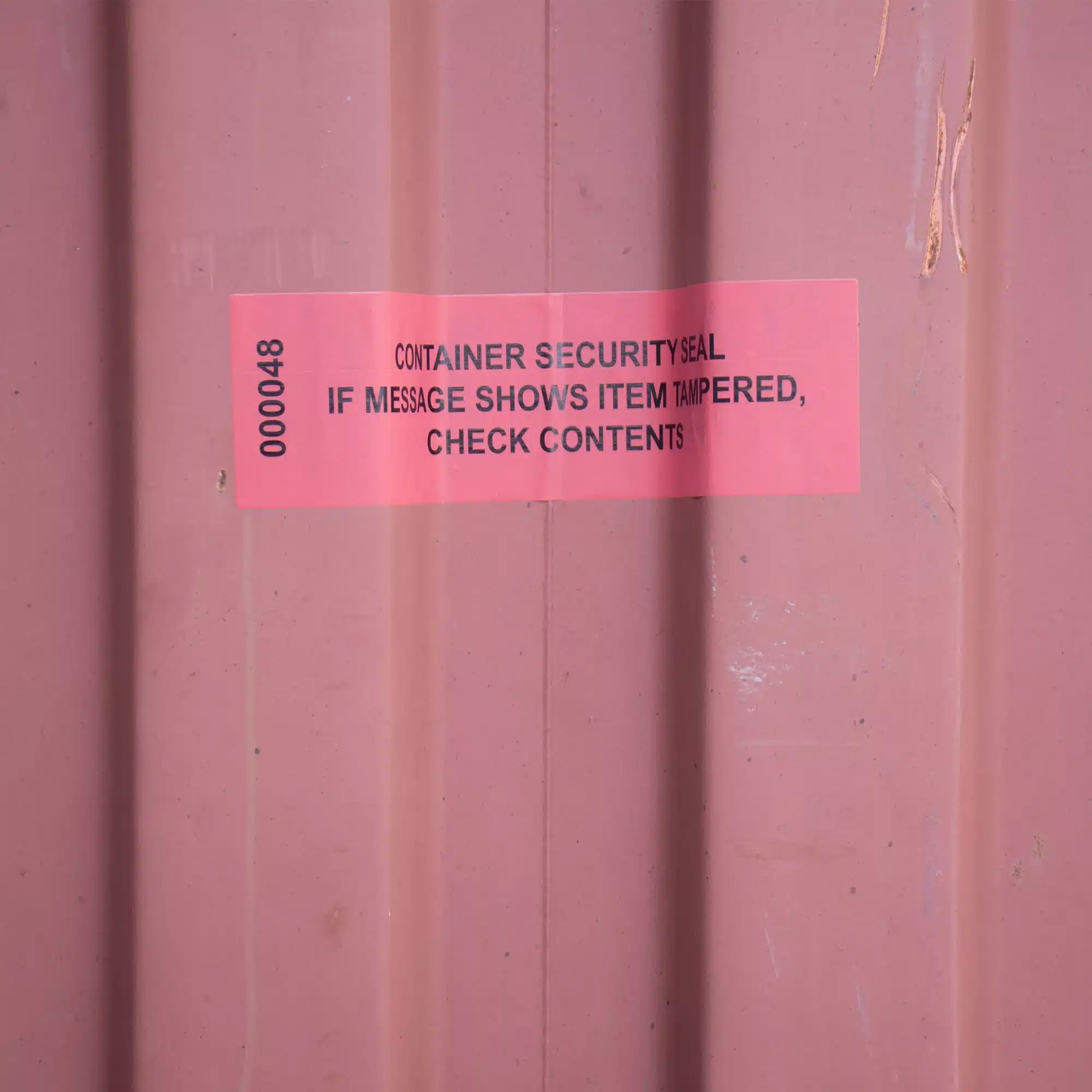
Shipping container labels
Larger permanent seals with dual number tabs for container and trailer doors.
View application →Non-residue labels
The construction behind clean removal from reusable assets.
View product →Useful guidance
Useful guidance
Non-residue tamper evident labels
Clean removal from reusable assets and painted surfaces, with the void pattern still released on lifting.
Permanent tamper evident labels
High-tack construction for outdoor and single-trip seals where the label should stay put.
Controlled drug tote box labels
The pharmacy and controlled-drug version of the same seal, with numbering and sign-off recorded on the label.
Healthcare and controlled environments
Where totes move between pharmacy, ward and theatre alongside trolleys, vials and clinical waste.
Custom labels: numbering and print options
Sequential numbers, barcodes, QR codes, depot names and writable panels — the specification step once the construction is chosen.
Next step
Match the label to your tote
Tote surfaces and lid geometry vary a lot between suppliers.
Known requirement
You know the tote, the label size and the data you need printed. Talk to our team about numbering and volumes.
Not sure what will work
Send us a tote or lid section. We will test non-residue constructions on the real surface and report what voids cleanly.