
Fast Food Tamper Evident Delivery Labels
Tamper evident sealing for takeaway and delivery packaging — kraft bags, delivery bags, cartons and containers — so the customer can see the order has not been opened between the kitchen and the door.
Paper is the material. VOID is the mechanism. We can supply paper constructions where lifting the seal reveals a clear VOID or your own security message, rather than leaving staff and customers to interpret a torn or badly adhered label.
Once an order leaves the kitchen it is out of sight. Complaints about missing or interfered-with items arrive after the fact, and neither the operator nor the courier can show what happened.
A tamper evident seal across the bag or container closure makes the state of the order self-evident on delivery. Intact means it has not been opened; voided means it has, and the conversation starts from a fact rather than a claim.
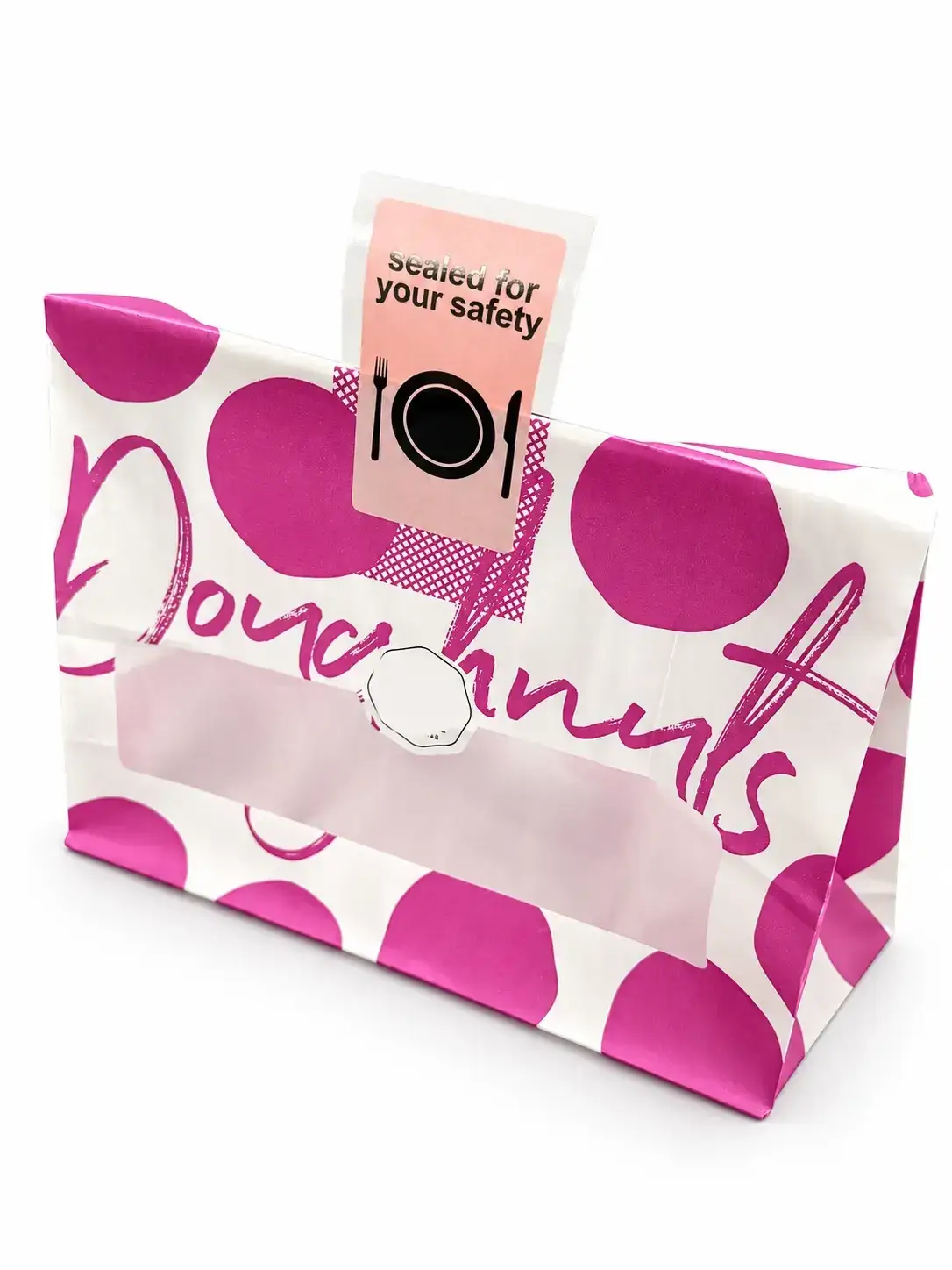
What interference should reveal
Opened en route, or not
01
Sealed at dispatch
The seal is applied across the bag or lid closure as the order is bagged.
02
Interference attempted
Lifting the seal releases the void layer straight away, and it is dry peel: no tacky adhesive is left on the label or the pack, so it cannot be stuck back down.
03
Evidence remains
The void message stays visible on the pack, so the driver and the customer see the same thing at handover.
Real evidence
Paper construction, in use
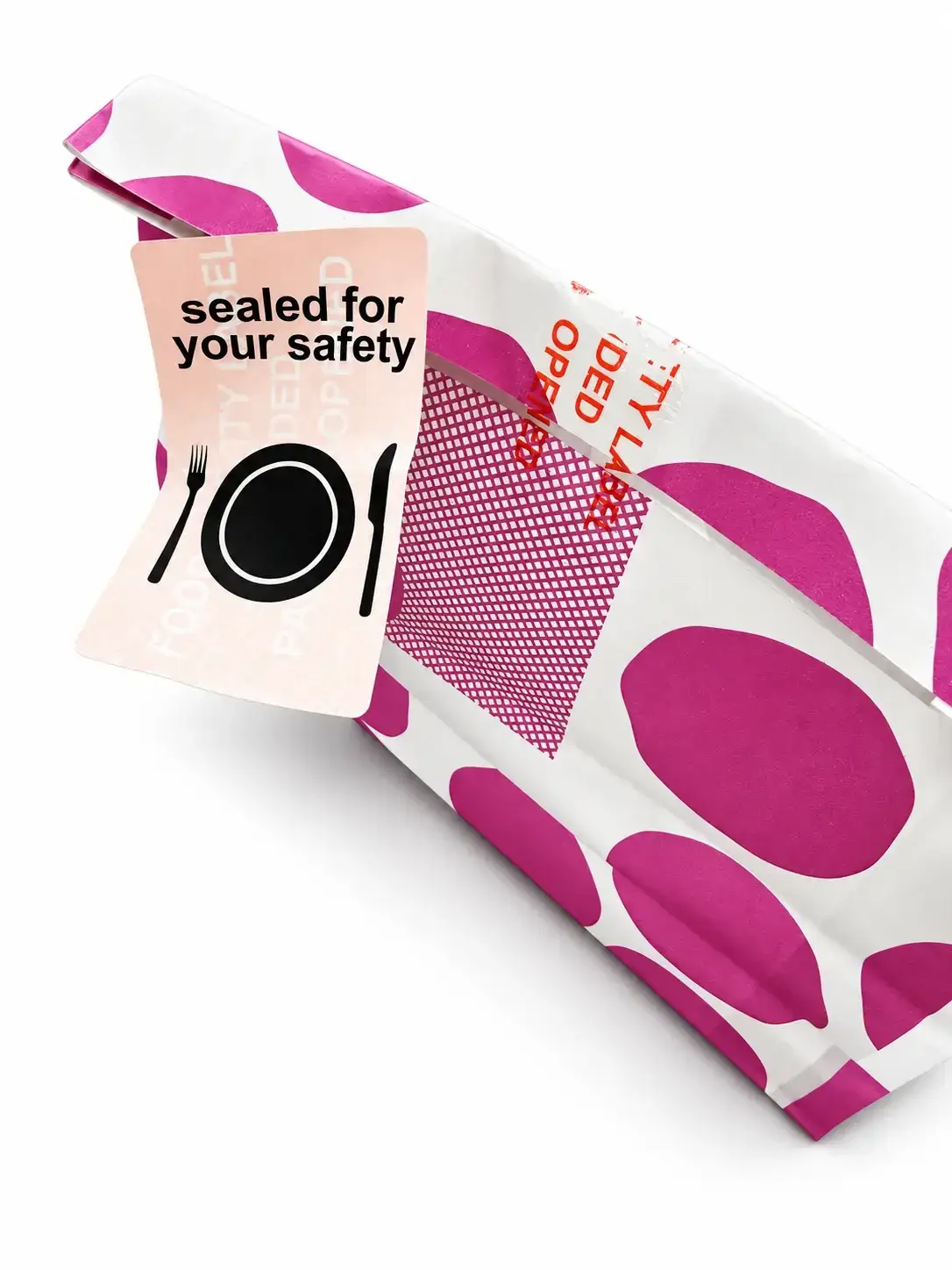
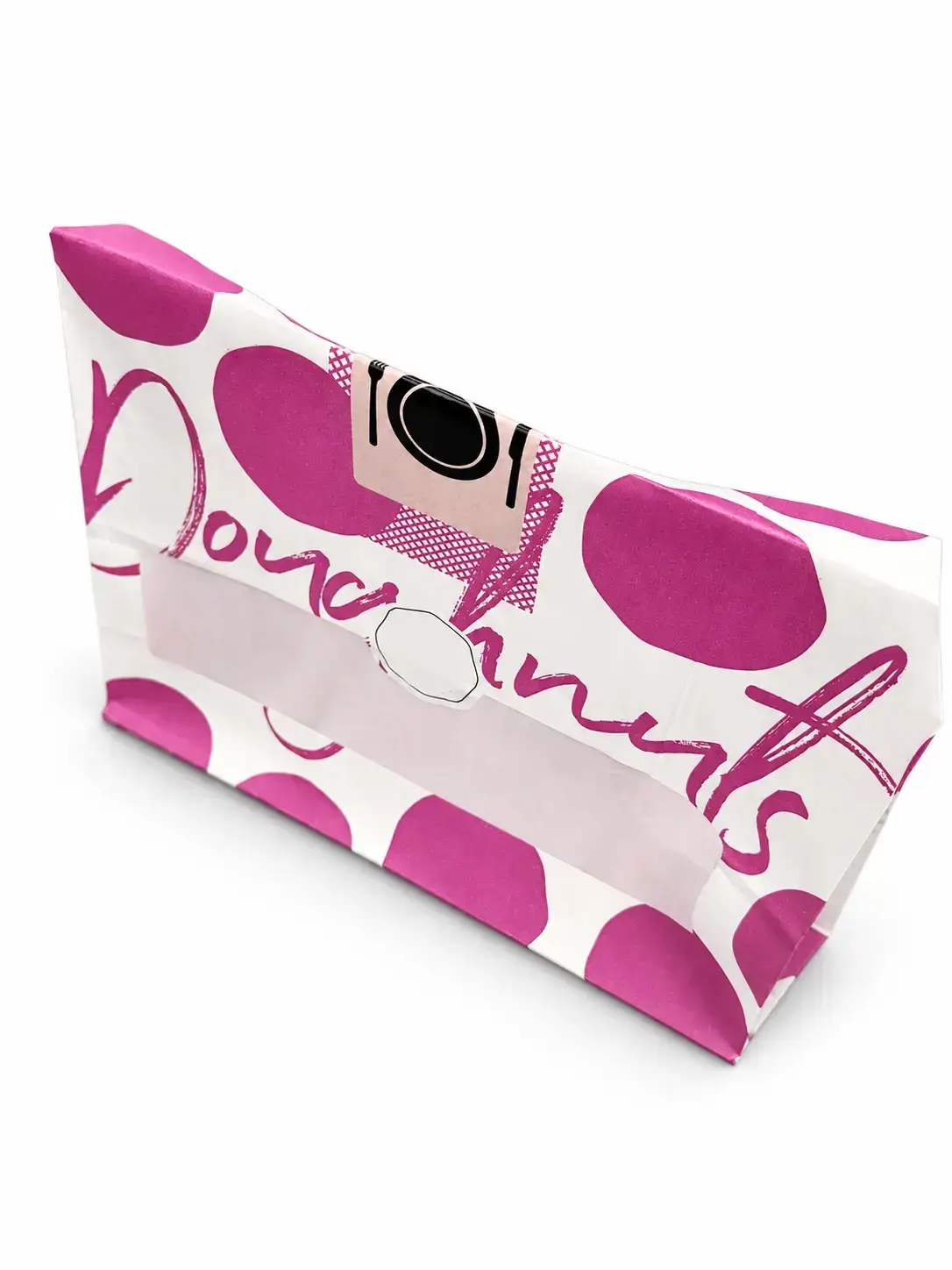
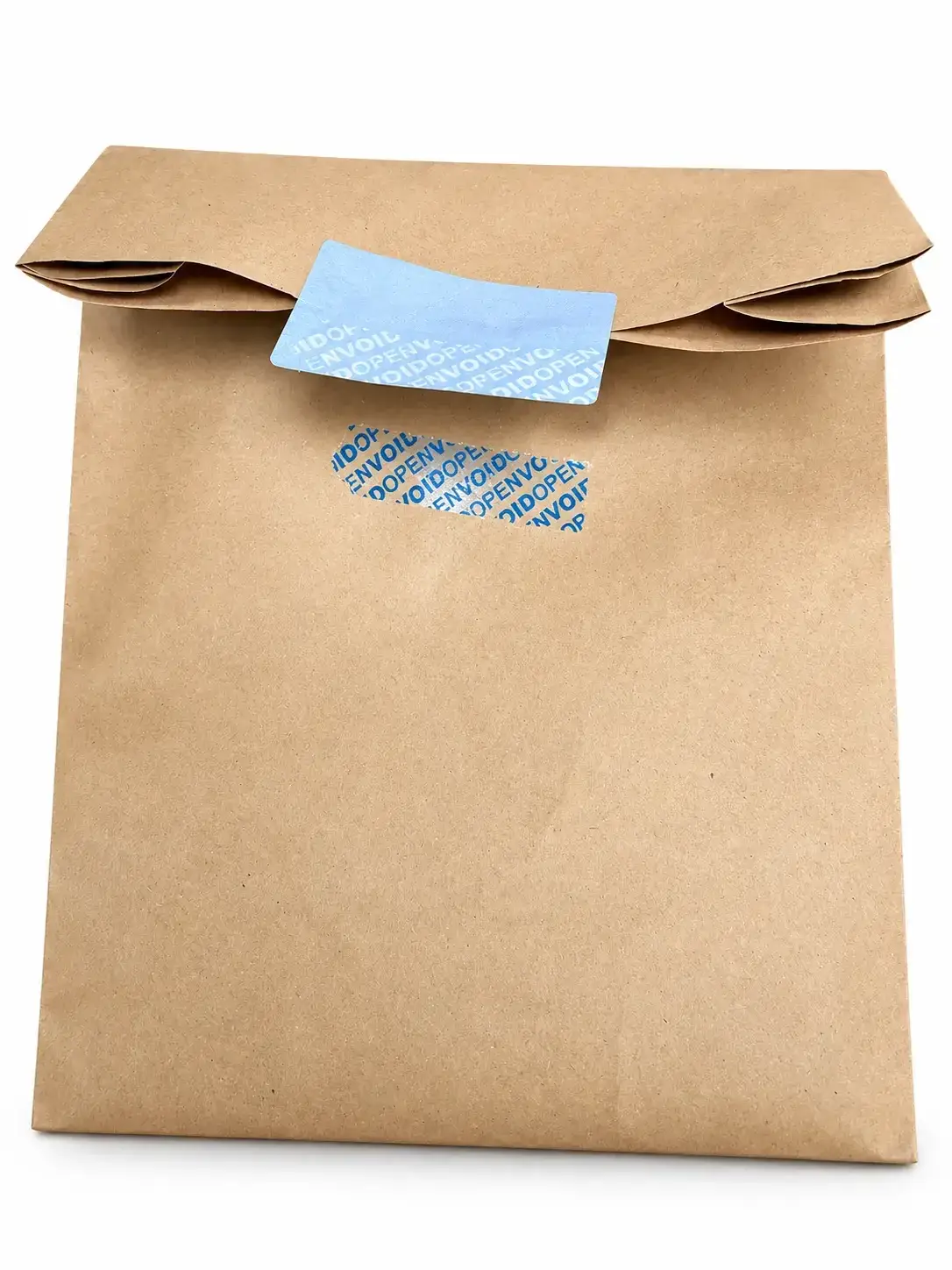
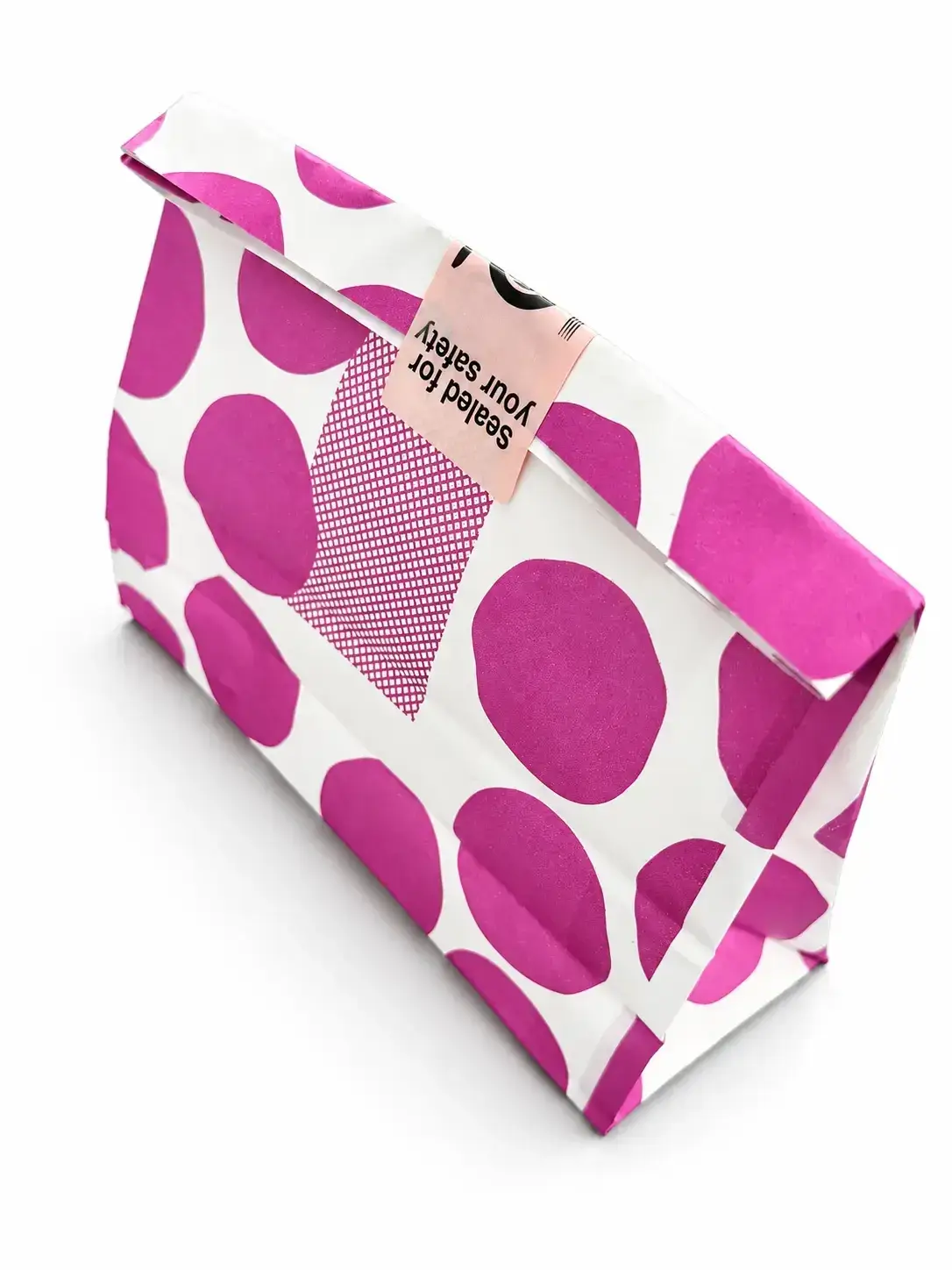
Shown on paper bags. The same constructions can be used on other food container packaging; test samples on your own pack.
Dry peel: once lifted, no tacky adhesive is left on the label or the pack, so it cannot be stuck back down.
Step one
What are you sealing?
The pack decides the seal. Paper, coated board and plastic containers do not behave identically, so substrate suitability is part of the specification rather than an assumption.
Kraft or paper takeaway bag
Seals applied across the folded or glued top of a kraft takeaway bag. Uncoated kraft is absorbent and often dusty from recycled fibre, so the adhesive is specified for that surface rather than assumed. This is the classic takeaway bag seal format.
Folded-top delivery bag
Larger multi-order delivery bags folded and sealed at dispatch. Seal length and shape are chosen to bridge the fold so the seal is designed to show evidence if the closure is opened — see also our integrated tamper evident paper bags where the evidence is built into the bag itself.
Carton or box
Burger cartons, pizza boxes and outer delivery cartons. Coated board and printed varnish behave differently from plain board, so the finish is confirmed before the construction is fixed. Wider closures are often better served by paper tamper evident tape.
Cup, tub or container
Curved PP tubs, lids and drinks cups. Small radius, condensation and chilled or hot contents all affect adhesion, so both the plastic type and the temperature at sealing matter.
Anything else in the pack
Sleeves, cutlery packs, grocery totes, click-and-collect handovers and mixed loads. If the closure is unusual, the fastest route is to send us the pack.
Choosing a construction
Paper is the material. VOID is the mechanism.
Paper describes what the seal is made of. It does not describe what happens when someone opens it. TamperTech can supply paper constructions where lifting the seal reveals a clear VOID or security message, rather than leaving staff and customers to interpret a torn or badly adhered label.
| Conventional adhesive or fibre-tear paper seal | Paper seal with a defined VOID or security-message reveal | |
|---|---|---|
| What staff and the customer see after opening | A seal that looks damaged, torn or lifted. Both parties have to judge whether that damage means interference or rough handling. | A defined message — VOID, or your own wording — revealed on the pack. The same thing is read the same way by the kitchen, the driver and the customer. |
| Reliance on adhesive or fibre damage | The evidence is the damage. If the seal was poorly stuck down, or lifted cleanly from a dusty or coated surface, the evidence can be ambiguous. | The message reveal is designed into the construction, so the evidence does not depend on how much the paper happened to tear. |
| Clarity of evidence | Interpretive. Useful, but it needs a trained eye and an agreed rule. | Explicit. A voided seal is a fact that a handover conversation can start from. |
| Substrate dependency | High. Tear behaviour changes considerably between kraft, coated board and plastic. | Still specified per surface, but the reveal is less dependent on how the substrate itself fails. |
| Print and customisation | Face print and numbering. | Face print, numbering, barcode or QR, plus a bespoke security message rather than a generic VOID where you want the seal to read as your brand. |
| Application considerations | Straightforward hand application. | Same hand application speed, with finger-lift formats where supported. Roll presentation and size are matched to the closure and the packing bench. |
Neither construction is universally better. Fibre tear and destructible behaviour remain genuinely useful characteristics on some packs, and not all paper seals behave the same way. The right choice depends on the pack, the surface and the workflow — which is why we specify against your actual packaging rather than from a catalogue. Compare the full set in paper tamper evident labels, permanent labels and non-residue labels, or read the background in paper-based tamper evidence. A seal evidences opening or interference; it does not by itself demonstrate freshness, hygiene or authenticity.
Product routes
Constructions used for this application
Paper labels and tapes
Paper-based constructions that reveal a VOID or bespoke message on removal and stay in a paper waste stream with the packaging. Paper tamper evidence.
Permanent labels
Filmic constructions that leave the void message on the container. Permanent labels.
Bespoke branded seals
Your own wording, colours and finger-lift format so the seal reads as part of the brand rather than an add-on. Custom labels.
Print on demand
Where order references are printed at dispatch. Direct thermal constructions.
Application and integration
Sealing at kitchen speed
Hand application at dispatch
Finger-lift formats and roll presentation are chosen so a seal takes about a second per order. Anything slower does not survive a busy service.
Surfaces and temperature
Paper bags, coated board, PP containers and chilled or hot items all behave differently. Confirm the packaging and the temperature at sealing so the adhesive is specified correctly.
Machine application
Where bags or sleeves are sealed on a line, formats can be supplied for label applicators — send the applicator details and line speed.
Driver and customer handover
The seal works best when both sides know the rule: an order arriving with a voided seal is reported, not accepted quietly.
Getting a meaningful quotation
What to tell us so we can quote properly
TamperTech aims to deliver a technically stronger specification at a commercially competitive price. Six pieces of information are usually enough for a firm quotation and samples.
Size and shape
Closure width, and whether the seal needs to bridge a fold, a lid lip or a curve. Give us the pack dimensions or send the pack.
Volume
Orders sealed per hour, and an approximate monthly or annual quantity. This is what sets the format, the roll presentation and the price per piece.
Material
Paper where you want the seal to stay in the paper waste stream with the packaging, or filmic where moisture, grease or freezer conditions demand it.
Mechanism
A defined VOID or bespoke security-message reveal, fibre tear, permanent evidence, or a non-residue finish where the pack must be left clean.
Print and identification
Brand artwork, sequential numbering, barcode or QR, and whether references are printed in advance or at dispatch on a direct thermal construction.
Application
Hand application at the bench, finger-lift handling, or an applicator on a line — with the machine details and line speed if it is automated.
Audience
Who specifies this?
Food-delivery sealing is rarely specified by one person. Some enquiries come from a single site with a bag and a problem; others come from a buyer writing a specification for a programme. Both are welcome, and both start the same way.
Restaurant and delivery groups
Central teams standardising how every site seals an order, so the same evidence is applied across branches and franchise partners.
Packaging suppliers and converters
Specifying the tamper-evident component inside a bag, carton or closure you already supply, under your own specification.
Distributors
Holding a repeatable construction for foodservice customers rather than sourcing a one-off print each time.
Contract packers
Sealing on a line or at a packing bench, where format, roll presentation and application speed have to suit the process.
Central procurement teams
Buyers who need a specification, sampling evidence and a supply route they can approve and repeat.
Food-delivery packaging programmes
Programmes where seal, artwork, numbering and schedule are agreed once and then supplied against demand.
Programme route
How a food-delivery programme is specified
Six steps from a pack in a jiffy bag to an approved, repeatable specification. The point of the sequence is that the construction is proven on your packaging before it becomes a standing order.
STEP 1
Send us the pack
Show us the actual takeaway bag, carton, cup, tub or closure. Photographs help, but the physical pack tells us far more.
STEP 2
Choose the evidence
Decide what the seal should do on opening: fibre tear or destruction, a defined VOID or your own security-message reveal, or another construction suited to the pack.
STEP 3
Confirm the surface and application
We test the real substrate — uncoated kraft, coated board, PP tubs and cups all behave differently — and confirm where on the closure the seal has to sit.
STEP 4
Confirm the specification
Size, roll format, print, Pantone or spot colour, numbering or data, and how the seal is handled at the bench or on a line.
STEP 5
Sample and approve
Test the construction on your own pack, in your own workflow, before anything is committed to a programme.
STEP 6
Repeat supply
Move the approved specification into recurring supply, with schedule and volume agreed around the application.
Specification
Food-delivery seal specification
Typical routes for food-delivery sealing. Every line is confirmed against the actual construction chosen for your pack before it is quoted.
| Popular sizes | 70 × 40 mm, 100 × 40 mm and 170 × 44 mm are the sizes most often used for bag and container closures. These are popular sizes rather than the only sizes available — formats are made to the closure. |
|---|---|
| Roll quantities | Commonly supplied on rolls of 500 or 1,000 labels. |
| Minimum order | 1,000 labels. |
| Lead time | Typically 3–4 weeks. Programme schedules and urgent requirements are agreed around the specification and volume. |
| Colour | UV flexographic printing in specified Pantone or spot colours, so a seal can be matched to your branding. Colour on a tamper-evident construction is signed off from a physical sample rather than a screen. |
| Evidence mechanism | Fibre tear or a defined VOID or security-message reveal, depending on the construction specified for the pack. See paper tamper evident labels and permanent labels. |
| Branding and data | Custom print, sequential numbering, barcode or QR, and bespoke security wording where the seal should read as your brand. Order references can be printed at dispatch on a direct thermal construction. |
| Documentation | Product-specific technical documentation is available as part of sampling, quotation and specification approval. Material, recyclability and declaration detail for the tested constructions is set out on our PPWR and packaging compliance resource. |
| Larger programmes | Recurring and high-volume supply is available by programme, with the schedule agreed against the approved specification. |
| Price | Quoted against the construction, size, print, quantity and programme requirement. |
Certifications held by Tamper Technologies Ltd are listed, with what each covers, on our accreditations page and credentials page — certification covers management systems rather than the performance of an individual seal. Paper constructions are single-use unfilled packaging components with technically recyclable evidence available for the tested construction; whether a finished pack is recyclable depends on the whole pack and the local collection route, so the qualifications on the PPWR resource apply. Where the pack, performance requirement and recycling route support it, we would rather move a food-delivery programme onto a paper-based seal.
Starting small, or supplying a programme
From 1,000-label trials and initial orders through to large recurring supply programmes, we agree the construction, print and supply schedule around the application. There is no generic online price, because the same seal size can be a plain stock item or a Pantone-matched numbered construction.
Want the evidence built into the bag?
Where you would rather buy one item than a bag plus a seal, SealSafe™ tamper evident delivery bags carry the tamper-evident closure as part of the bag itself — an all-in-one route for delivery and click-and-collect handovers.
Use case
Where it fits: Food delivery, meal kits and cold chain
Who it is for: Food brands, caterers, meal-kit businesses and cold-chain distributors with several handoffs.
How TamperTech helps:
- Bag tape, box tape and labels show if a package has been opened.
- Cold-chain labels and tapes are designed for temperature-sensitive routes.
- Numbers and barcodes support inspection logs.
Best-fit applications: Delivery bags, meal kits, chilled and frozen boxes, premium food parcels.
What it does not do: it does not stop a pack being opened and it does not certify what is inside. It shows whether the seal has been disturbed.
Related
Where else this is used
Food and beverage
The full food and drink application set.
Recipe kit labels
Sealing meal-kit components and outer packs.
Recipe box tape
Sealing recipe and meal-kit cartons with tamper evident tape.
Useful guidance
Before you specify
Paper-based tamper evidence
Recyclable paper labels and tapes for food packs and delivery bags.
Label constructions explained
Permanent, non-residue and paper constructions and what each leaves behind.
Custom tamper evident labels
Sizes, branding, numbering and bespoke void messages.
Tell us how you bag orders, how many you dispatch an hour and what the packaging is.
You know what you need
Formats, constructions, numbering and volumes — talk it through with the team and get samples or a quotation.
You are not sure yet
Send us the pack or the problem. The Security Lab looks at the application and helps specify the right level of security.
Where to look next
Sealing the outer delivery carton too? Compare constructions in the tamper evident tape range. Building a food-delivery pack from scratch? See tamper evident packaging manufacture and contract packing.
Still using card or board bag seals? See how paper tamper evident delivery labels compare with printed board cases.