
Packaging Security

Tamper Evident Packaging Security Solutions

Tamper evidence has to work with the pack, not just the security product.

TamperTech helps organisations protect cartons, bags, bottles, containers and other packaging with labels and tapes selected around the substrate, the application method and the conditions the pack travels through. The same construction rarely suits a corrugated carton, a poly mailer and a cold, damp outer case, so the specification starts with the pack in front of you.

Know what you need? Talk to our team. Not sure what will work? Send us the pack.
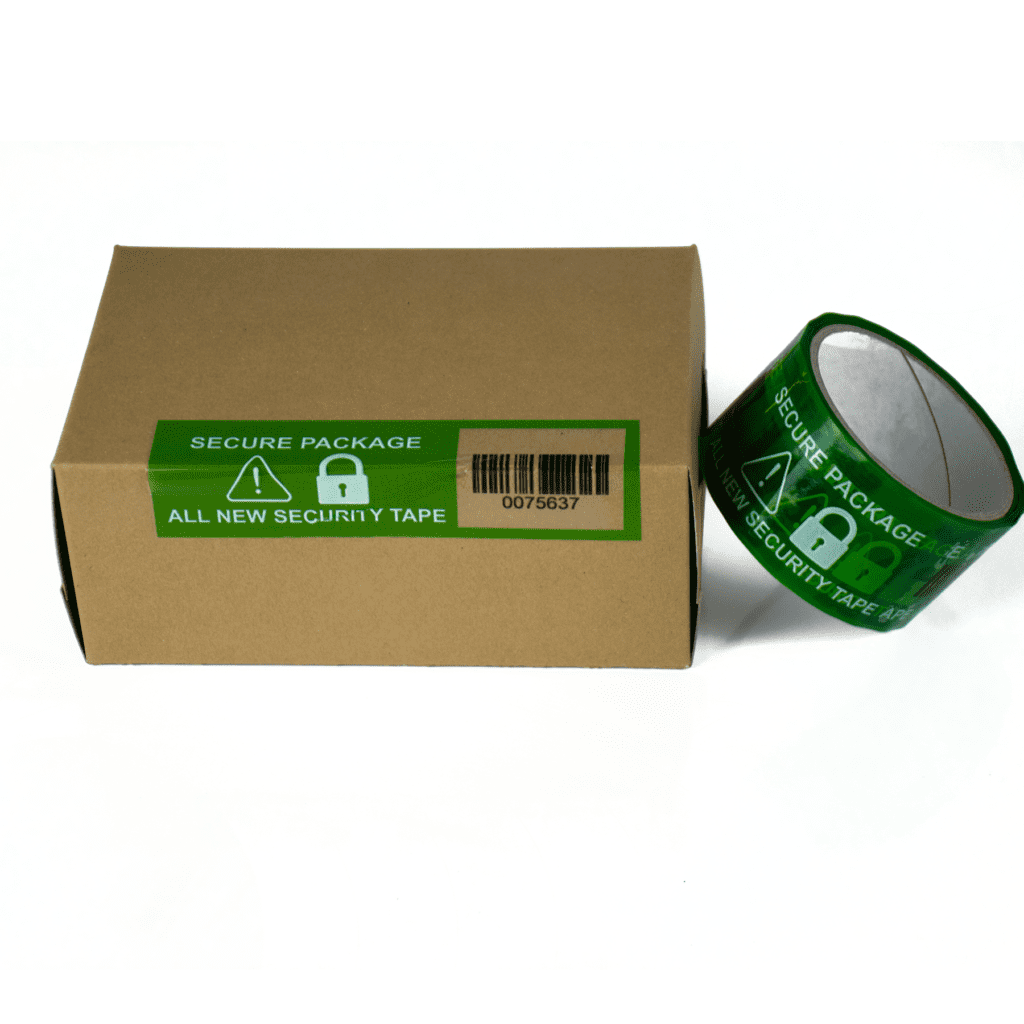
Numbered SECURE PACKAGE tamper-evident box tape sealing a kraft carton, shown beside the tape roll

The category explained

What tamper evident packaging is — and what it is not

Tamper evident packaging is any pack closure designed so that opening it, or attempting to open it, leaves a change that cannot be undone. The pack still opens. The point is that it cannot be opened and then made to look untouched.

Buyers ask for this in different words — anti tamper packaging, security packaging, sometimes tamper proof packaging. They usually describe the same requirement. Tamper evident is the accurate term: the pack shows that it has been interfered with. Nothing on this page is tamper proof, and we do not claim it is. The difference between tamper evident and tamper proof is explained in full separately.

TamperTech manufactures these constructions in the UK. Converting, printing and quality control take place at our site in Ashbourne, Derbyshire, under ISO 9001, ISO 14001 and ISO 45001 certified processes, with a European distribution hub in Poland — see our credentials.

Tamper evidence

Makes interference visible. A label or tape separates, voids or transfers a security message when it is lifted, peeled, heated or cut, so the closure cannot be restored.

It works because someone looks at it. Evidence has to be readable in seconds by a warehouse operative, a driver or a customer — at a defined point in the journey.

Tamper prevention

A different job, and not what a seal does. No label, tape or closure makes a pack impossible to open with enough time, tools and intent.

Where access genuinely has to be prevented, that comes from the container, the process and the controls around it. The seal tells you whether those controls held.

Authentication

Answers a different question: is this pack, and this seal, genuinely ours? Custom security messaging, covert features, hidden UV print and unique numbering make a seal hard to reproduce.

Tamper evidence and authentication are often specified together — one so anyone can check the pack, one so your own team can confirm the seal itself.

What it can and cannot show

It can showThat a closure was disturbed, or that it demonstrably was not, at the point someone checked it.
It can showWhere in a journey a pack was accessed, when seals are checked and recorded at each handover.
It can showThat a seal is yours, where custom print, covert features or numbering are specified.
It cannot showWhat is inside the pack, or that the contents, count and condition are correct — goods-in checks do that.
It cannot showThat nothing was accessed by another route, such as a seam, base or second closure left unsealed.
It cannot showAnything at all, if nobody is asked to check the seal and record the result.

A note on "tamper proof". It is the phrase most people search for, and we understand why. Tamper evident is the accurate term: the aim is to make interference visible and undeniable, not to claim a pack cannot be opened. Any supplier promising tamper proof packaging is describing something that does not exist.

The problem

What packaging security actually has to reveal

Tamper evident labels and tapes do not physically prevent access, and no seal makes a pack impossible to open. What a well specified seal does is deter casual interference and make interference visible, so the next person in the chain can check the pack and act on what they see.

Unauthorised opening

A pack opened between despatch and receipt should not arrive looking untouched. The seal gives the receiver something definite to check.

Resealing

Standard tape can be lifted and pressed back down. Tamper evident constructions separate on removal so the closure cannot be restored unnoticed.

Product substitution and removal

Where contents can be swapped or part removed, visible seal evidence narrows down where in the journey the pack was accessed.

Label and tape removal

Attempts to peel, lift or heat a seal separate the layers and leave a permanent void message or pattern.

Visible evidence of interference

Evidence has to be readable in seconds by a warehouse operative or a customer, not only under laboratory conditions.

Supporting verification

Numbering, barcodes, QR codes and hidden UV print let a seal be recorded at sealing and matched at receipt.

Start with the pack

Start with the pack, not the product code

Most specification questions resolve quickly once the pack format is known. These are the routes we are asked about most often.

Cartons & boxes

Corrugated and board outers sealed with tamper evident box tape, applied by hand dispenser or machine, with paper options where the pack has to stay recyclable.

Bags & pouches

Bag tape closures and pouch labels for polythene, woven and paper bags, including reusable pouch workflows where the bag stays in service.

Bottles, jars & closures

Neck and cap seals for bottles, jars and tubs, specified around curved surfaces, closure material and the way the container is opened.

Pallets & outer cases

Pallet security tape and outer case seals so a load can be checked at each handover without breaking it down.

Reusable containers & totes

Non residue constructions that remove cleanly, so totes, trays and reusable containers can be resealed on the next run without build up.

Bespoke / unusual packs

Awkward geometry, difficult substrates or a closure that nothing standard fits. These are specified from a sample of the actual pack.

Paper tamper-evident "sealed for your safety" label closing the flap of a kraft paper delivery bag
Paper tamper evidence applied to a kraft delivery bag
Tamper-evident label part-lifted from a white carton, leaving a permanent OPENED void message
Label lifted from a carton leaving permanent OPENED evidence
Numbered pallet secure tamper-evident tape applied over the stretch wrap of a black-wrapped pallet
Numbered pallet secure tape sealing a wrapped load

How the evidence behaves

The principal tamper behaviours, and how to choose between them

Constructions differ in one decisive way: what is left behind when the seal is removed. That is a workflow decision, not a quality ranking — the right behaviour depends on whether the pack is single trip or reused, and on whether the evidence needs to stay with the pack or with the seal.

Permanent / full transfer

  • The security message — VOID, OPENED or your own wording — transfers onto the pack surface when the seal is lifted.
  • The evidence stays on the pack even if the label or tape is removed and thrown away.
  • The natural choice for single-trip cartons, outer cases and consumer packs.

Hybrid / partial transfer

  • Part of the message transfers to the surface and part stays on the seal, so both the pack and the removed seal carry evidence.
  • Useful where the used seal is retained as a record but the pack must also show it was opened.
  • Specified where two parties each need to hold something after the pack is opened.

Non-residue

  • The seal lifts cleanly, the message stays on the label or tape, and the surface is left unmarked.
  • The right behaviour for totes, trays, cages, cabinets, vehicles and any container resealed on the next run, where residue build-up would be a problem.
  • Here the used seal itself is the record, so numbering and logging matter more.

Destructible / fibre tear

  • The seal breaks up rather than coming away in one piece, so it cannot be lifted intact and reused.
  • An optional specification for asset and closure labels where reuse of the seal is the specific risk.
  • Material is not the mechanism. Paper tamper evidence normally works by revealing a clean dry-peel VOID or security message — fibre tear is one option within paper, not the definition of it.

Paper or film?

The carrier changes how the seal behaves in the real world, and it changes the recycling stream. It does not, by itself, change the level of security.

Substrate and bondBoth carriers are specified to the surface — board, coated carton, polythene, woven bag material, glass, painted metal or plastic closures — and tested on your own material.
Environment and moistureFilm is the more predictable carrier for damp, chilled, wash-down and outdoor conditions. Paper needs its exposure understood before it is specified.
Strength and handlingFilm handles abrasion, stacking and long transit well. Paper tears by hand without a blade, which suits pack-bench sealing.
PrintFixed security messaging and brand colour are pre-printed as UV flexographic spot colour to a Pantone reference on either carrier.
Plastic reductionWhere the objective is removing plastic from the outer, paper is the route — provided the conditions the pack meets are honestly assessed first.
ApplicationFilm runs more readily through case sealers and automatic applicators. Paper is most often hand applied.
RecyclingA paper seal on a paper outer keeps the pack in one stream. A film seal on a board outer usually means separating the two.

Security approach

Choose the security approach

Once the pack and the closure are understood, the choice is usually between four families. Many packs use more than one.

Tamper Evident Labels

Non residue, permanent, printable and speciality label constructions for seals, closures and access points.

Tamper Evident Tape

Standard, custom, paper and pallet security tape for carton, case and pallet sealing by hand or machine.

Tamper Evident Bag Tape

Bag closures across defined security levels, including coin, evidence integrity and duty free applications.

Paper Tamper Evidence

Paper and paper hybrid constructions where plastic reduction and recyclability matter to the pack.

Explore all products

The full range, if you would rather start from the product than the pack.

Products by application

Existing application routes, where a comparable job has already been specified.

Application & integration

What determines whether it works in practice

Substrate

Corrugated board, coated cartonboard, polythene, woven bag material, glass, painted metal and plastic closures all release adhesive differently. Constructions are tested on your own material before supply.

Pack geometry

Flat panels, curved bottles, gussets, folds and small closures all change the available sealing area. Format and size are specified to the closure rather than the other way round.

Hand, applicator or machine application

Hand dispensers, semi automatic applicators and automatic case sealers place different demands on liner, core, roll length and tension. Where labels or tape run through a machine, formats are matched to the equipment.

Temperature and environment

Application temperature, chilled or frozen storage, humidity and outdoor exposure all affect adhesion and void behaviour. Low temperature adhesives are available where packs are sealed in unheated areas.

Handling and supply chain conditions

Abrasion, stacking, multiple handovers and long transit times determine how much of the seal survives to the point of checking, and where the check should happen.

Verification in the field

Seals are designed to be read by eye in seconds. UV features need a UV torch at the check point, so decide where verification happens before specifying them.

Before you specify

What to specify, and what to test on the real pack

Nearly every specification problem we see comes from testing a seal on a flat sample rather than in the workflow it has to survive. Work through this list with your actual pack, your actual process and your actual conditions.

SubstrateThe exact material and finish, including recycled board, varnish, print, laminate, low surface energy films and powder coating.
Surface conditionDusty, waxed, damp, oily, freshly cleaned or already wrapped surfaces all change the bond. Test the surface as it is on the line, not as it should be.
Application temperatureThe temperature at which the seal is applied — an unheated despatch bay or a chilled room needs stating up front.
Service environmentChilled, frozen, humid, outdoor, wash-down, or long ambient transit. Adhesion and void behaviour both change with conditions.
Moisture and condensationPacks moving between temperatures sweat. Confirm the seal, the message and any barcode survive it.
Required evidenceShould the evidence stay on the pack, on the seal, or both? That single answer decides the construction family.
Reuse requirementsIs the container reused? Reused containers need clean removal without residue build-up run after run.
Application methodHand, dispenser, semi-automatic applicator or case sealer — and at what line speed, with what gloves and what tension.
Who checks the seal, and whenName the check point. A seal that nobody inspects at receipt produces no evidence, however well specified.
Numbering, identity and loggingSequential numbers, barcodes, QR codes, dual number tabs or covert UV — and who records the number at seal and verifies it at receipt.
Verification equipmentCovert and UV features need a torch or reader at the check point. Decide where verification happens before specifying them.
Test in the real workflowSeal a filled pack, allow the dwell time your process actually gives it, put it through the conditions it will meet, then attempt removal.

If several of these answers are still open, that is normal — and it is exactly what the Security Lab is for. Send the pack and we will work through them with you.

Sector routes

If your requirement is sector specific

Pharmaceutical

Cartons, vials, tote boxes and controlled shipments.

Logistics

Cases, totes, containers and machine applied case sealing.

E-commerce & Retail

Outbound parcels, returns and in store packs.

Food & Beverage

Chilled packs, containers and takeaway closures.

Cash & Valuables in Transit

Bags, cassettes, pouches and handovers.

All sectors

The full list of sectors we supply.

Next step

Packaging security rarely fails because of the label alone

Not sure what will work

Send us the pack

Difficult substrate, awkward closure, or no idea which construction fits? Send us the pack and the workflow. The Security Lab tests it and tells you what actually works.

You know the specification

Discuss your packaging requirement

Format, construction, print, numbering, volumes and lead times — talk it through with the technical team and we will send samples and a quotation.