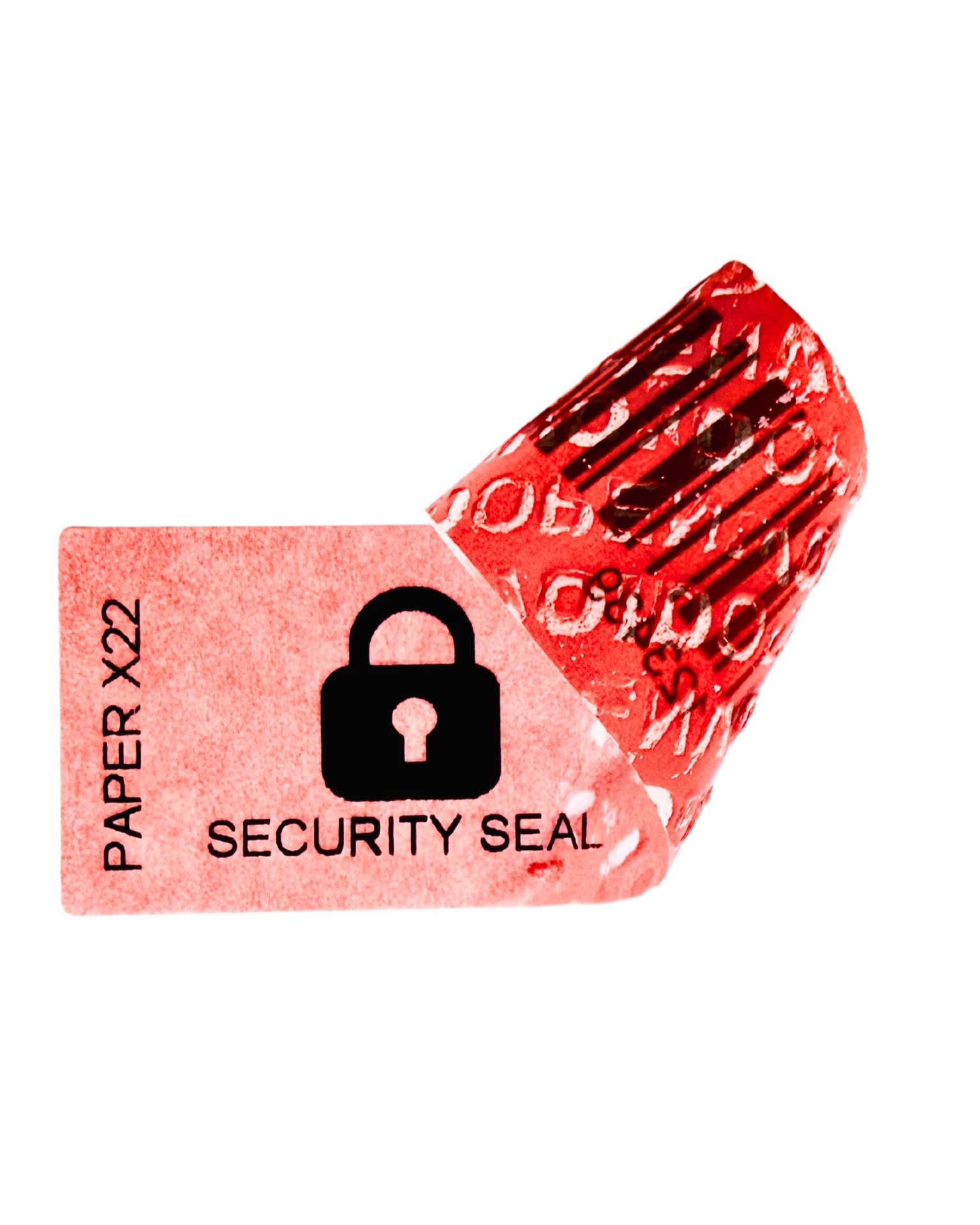
Paper non-residue range
Paper Non-Residue Tamper-Evident Labels
Visible evidence of opening, without adhesive transfer being left on the receiving surface.
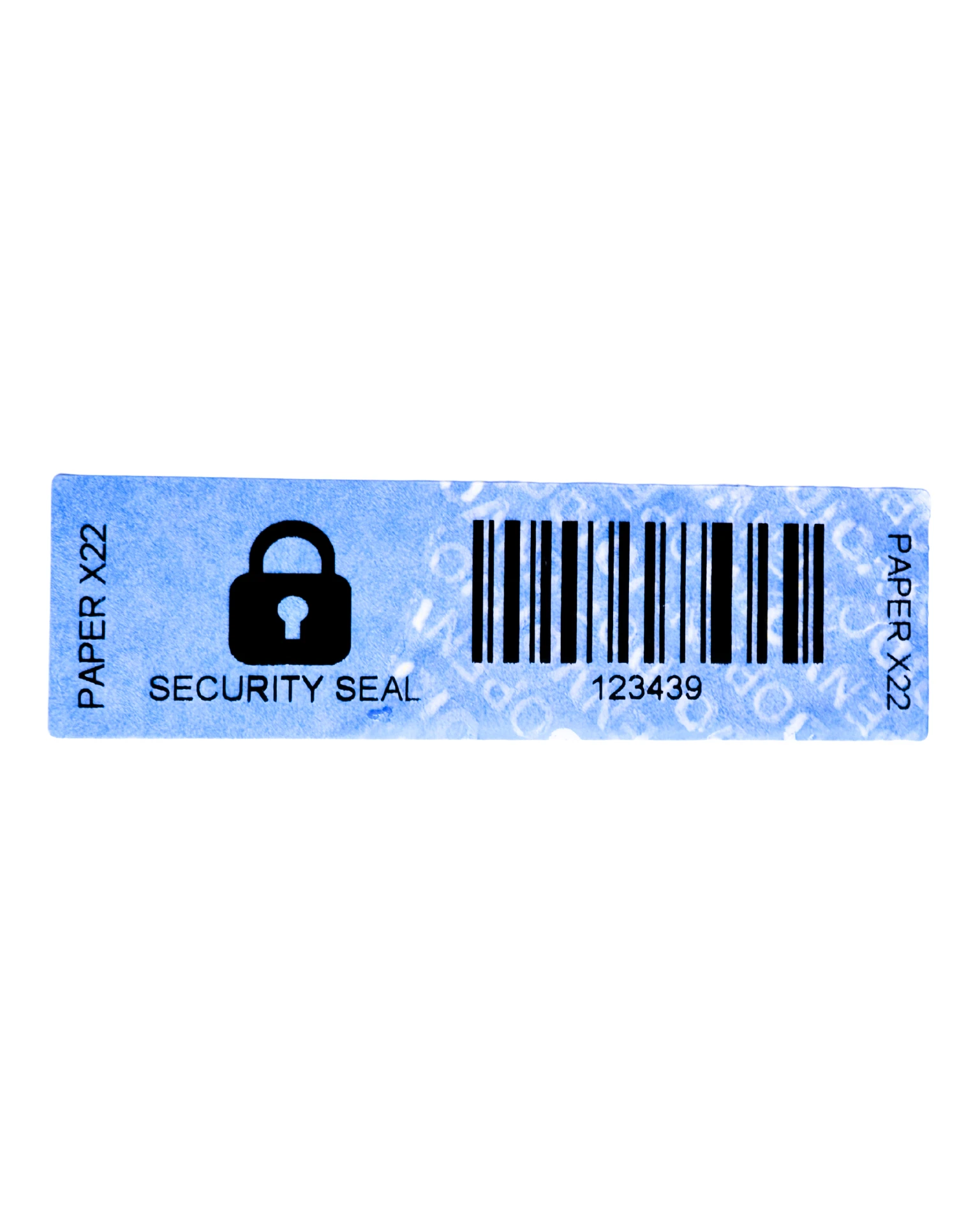
A paper-faced no-transfer tamper-evident label for reusable equipment, totes, trays and other suitable surfaces where the recipient needs a clear indication of interference but the receiving surface needs to remain clean for reuse.
When the label is lifted, the security construction reveals a visible evidence message within the label. The adhesive is designed to remain with the label rather than transfer onto the receiving surface.
Custom size, shape, print, Pantone/spot colour, numbering and barcode options available.

Why paper non-residue
Four reasons to specify it
Clean receiving surface
Designed for applications where equipment, containers or other assets are opened, inspected and reused without wanting adhesive deposits building up on the receiving surface.
Visible opening evidence
Attempted lifting activates the security construction and reveals a visible evidence message within the label.
Paper-faced construction
A paper face for applications where the appearance, print characteristics or material choice of paper is preferred to conventional film.
Identification and traceability
Sequential numbers, barcodes and customer-specific print can make the label part of the handover, inspection or recording process.
How the construction works
Three stages, one visible result
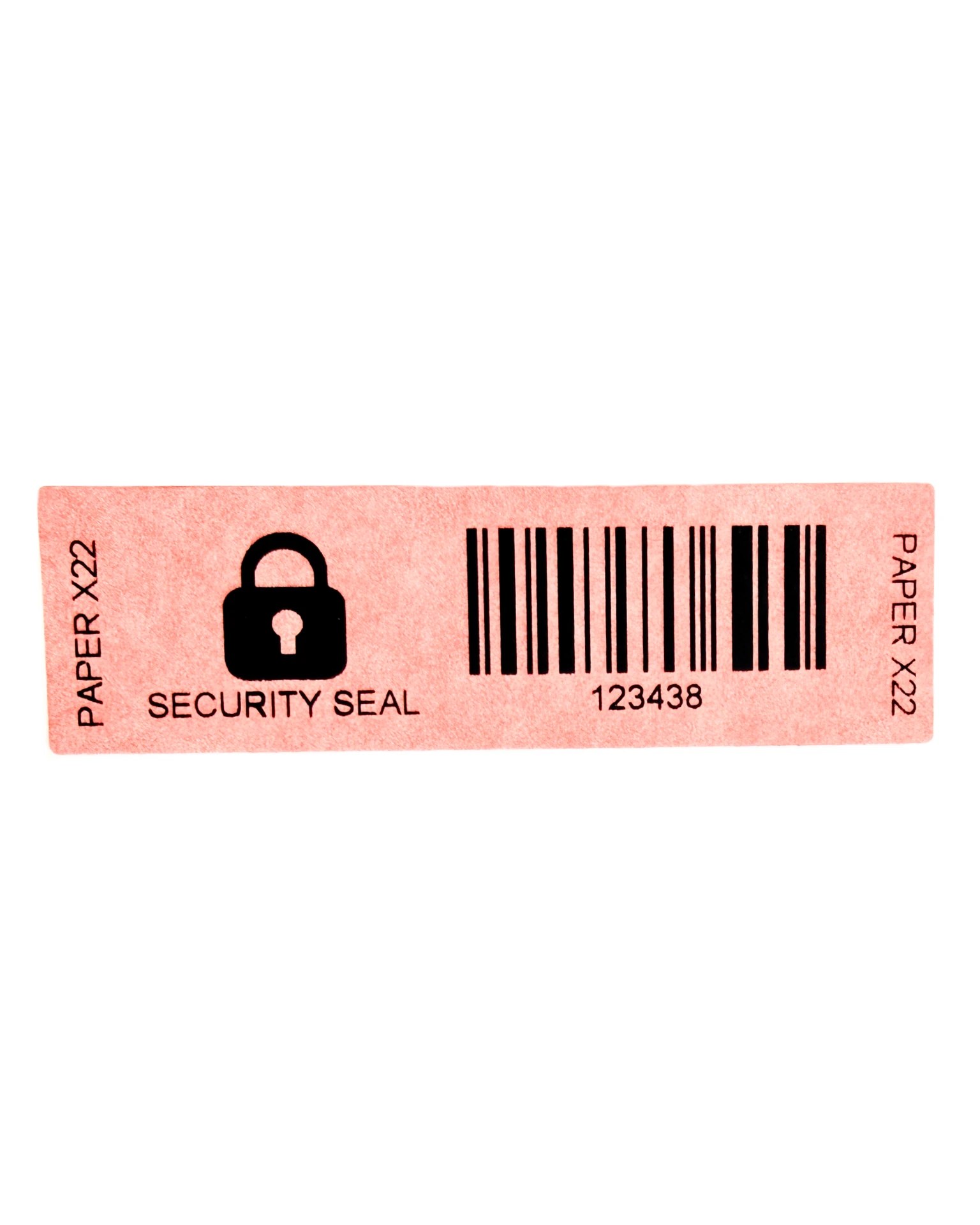
01Applied
Label in place before opening.
02Peeling
As the label is lifted, the construction separates.
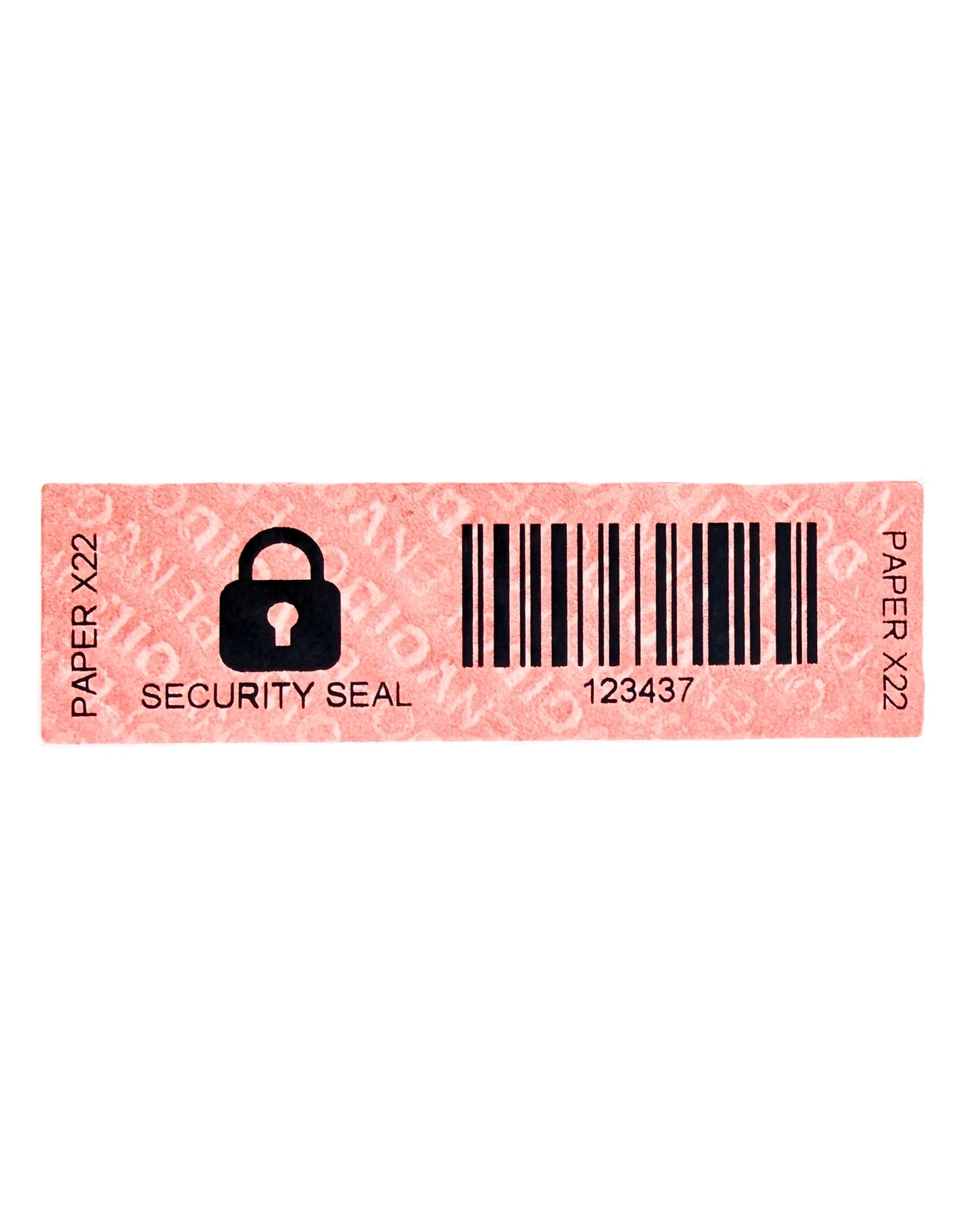
03After removal
Evidence remains visible after the label is removed.
Actual performance depends on the receiving surface, temperature, dwell time and handling conditions. For critical applications, test the construction on the real item.
Applications
Where paper non-residue earns its keep
Reusable totes, trays and containers
For returnable logistics assets that are repeatedly sealed, opened and placed back into circulation.
Airline catering trolleys and reusable service equipment
For suitable reusable trolley, container and service-equipment applications where a visible check is required but repeated residue build-up is undesirable.
Suitable aircraft access points and interior applications
For suitable surfaces where an access point or closure needs a visible seal during a controlled period and the receiving surface needs to return cleanly to service. Suitability must be tested and approved by the customer for the particular aircraft, surface and operating procedure.
Reusable transit cases and equipment enclosures
Where cases, tool stores or equipment housings are repeatedly opened, inspected and resealed.
Cabinets, lockers and controlled storage
For controlled access points where inspection evidence is useful but permanent adhesive transfer is undesirable.
Controlled handovers
Sequential numbering and/or barcodes can support processes where the applied seal is recorded at dispatch and checked at receipt.
Choosing the face material
Paper or film non-residue?
Both constructions can provide visible opening evidence while avoiding deliberate adhesive transfer to the receiving surface. The better choice depends on the surface, environment and handling conditions.
Choose paper non-residue when
- a paper face is preferred;
- the asset is reusable and needs to remain clean;
- the environment is mainly indoor, controlled or moderate;
- paper appearance or print characteristics matter;
- the receiving surface proves suitable in testing.
Consider film non-residue when
- greater durability is required;
- the application is wetter or more exposed;
- abrasion or heavier mechanical handling is expected;
- there is greater temperature/environmental variation;
- the substrate/application is better suited to an established film construction.
Not sure? Send us the actual item and we can test the surface.
Customisation
Customise the label around your operation
Paper non-residue labels are specified around the application, not sold as one fixed stock design.
Custom size and shape
Matched to the closure, joint or available sealing area.
Surface print
Logos, instructions, security wording and customer-specific graphics.
Colour
UV flexographic Pantone/spot colour, agreed per job and signed off from a physical sample.
Security-message design
Standard or customer-specific evidence patterns where technically appropriate.
Sequential numbering
Useful where individual seal identities are recorded and checked.
Barcodes / variable data
For suitable machine-readable identification and workflow requirements.
Roll and core configuration
Configured for hand application or supported dispensing/application equipment.
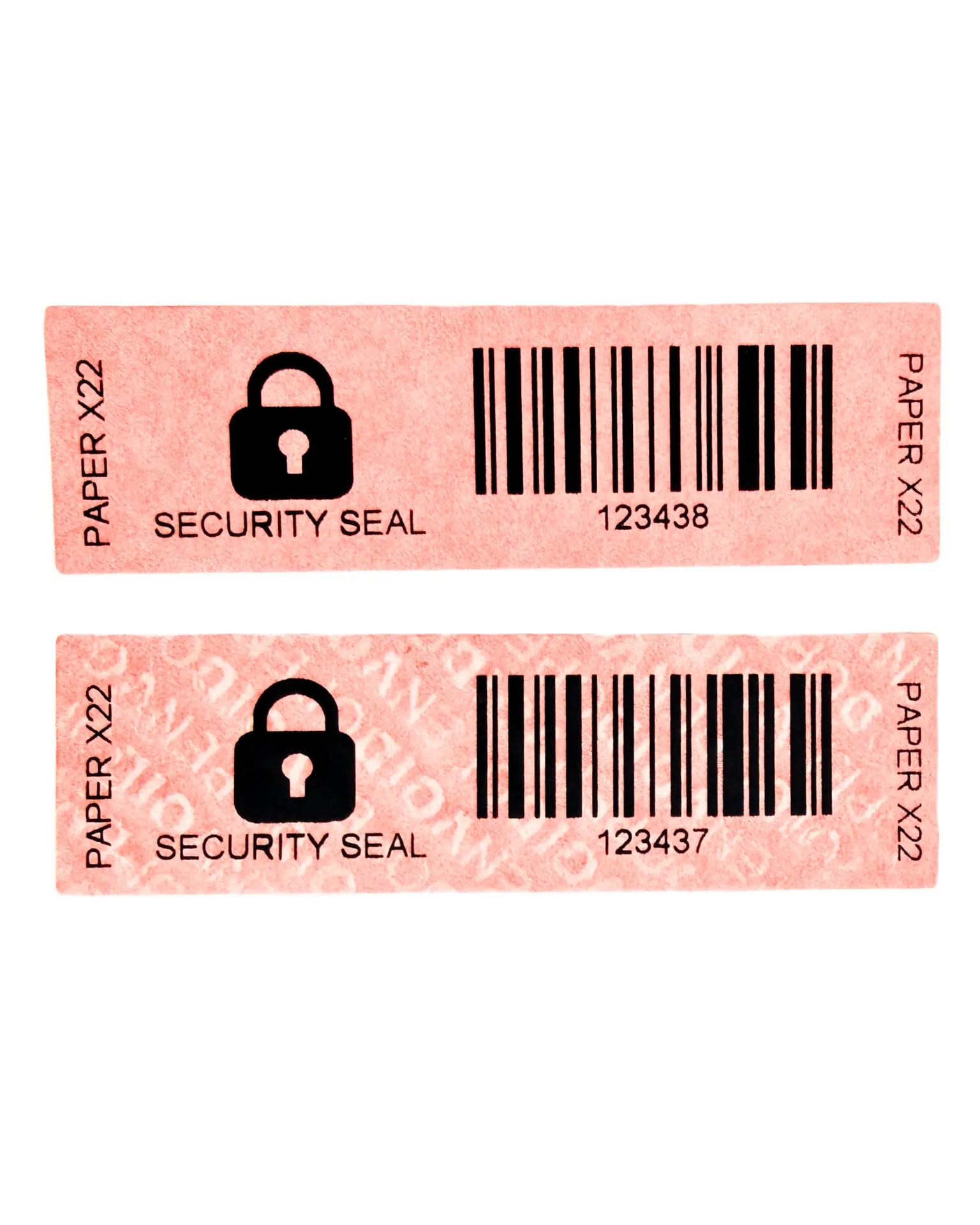
In use
A simple handover workflow
Seal
Apply the label after the item has been checked and closed.
Record
Where numbering is used, record the expected identifier.
Transport / hold
The label remains across the access point during the controlled period.
Inspect
At the next handover, check that the expected seal is present, the number matches where relevant and the label shows no visible interference.
Remove
After authorised opening, remove the used label.
Reseal
Where the surface and construction are suitable, the reusable asset can then enter its next cycle without the deliberate residue transfer associated with a transfer construction.
Sequential numbering only adds useful traceability when the identifier is actually recorded and checked as part of the customer’s process.
Non-residue or permanent?
When should you use a permanent label instead?
Non-residue / no-transfer
Keeps the visible evidence primarily within the removed label, so the receiving surface can return to use.
Permanent / transfer
May be preferable where you want evidence deliberately left behind on the receiving surface after the label is removed.
Not sure which behaviour you need? Discuss the application with us.
Specification
What we need to know before specifying the label
- receiving surface/material
- painted, coated, plastic, metal, board or other substrate
- flat, curved or textured surface
- how long the label remains applied
- expected temperature range
- moisture/exposure
- abrasion/mechanical handling
- whether removal must leave the receiving surface clean
- required size
- numbering/barcode requirements
- hand or machine application
- approximate volume
The actual surface matters. A security adhesive can behave differently on different plastics, coatings and painted finishes, so critical applications should be tested on the real item under representative conditions.
Industry context
Aviation-security context
Tamper-evident sealing forms part of wider aviation-security procedures in relevant supply-chain applications. For example, UK Civil Aviation Authority guidance for regulated in-flight suppliers refers to applying tamper-evident seals and protecting containers and vehicles used to transport in-flight supplies. IATA security guidance also identifies tamper-evident sealed goods and catering carts/containers within catering-security considerations.
These references are industry context only. They are not an approval or certification of any TamperTech product.
Security Lab
Test the actual surface before committing
If the receiving surface is unusual, coated, painted, textured or business-critical, send TamperTech the actual item or representative sample. Testing can help establish:
- initial adhesion
- tamper-evidence behaviour
- removal behaviour
- whether adhesive transfers onto the receiving surface
- visual result after opening
- suitability of paper versus film
- appropriate size and construction
Manufacturing
Made and controlled at Ashbourne
Manufactured in Ashbourne, Derbyshire, where converting, printing and quality control take place.
TamperTech can work from an existing specification or help develop and test a construction around the customer’s surface, application and inspection process.
FAQ
Paper non-residue label questions
What does non-residue / no-transfer mean?
The adhesive is designed to stay with the label when it is removed, rather than deliberately transferring onto the receiving surface. The evidence of opening appears within the label itself.
What happens when the paper label is removed?
Lifting activates the security construction and a visible security message (such as VOID or OPENED wording, depending on design) appears within the label.
When should I choose paper instead of film?
Paper suits mainly indoor, controlled or moderate conditions where a paper face or its print characteristics are preferred. Wetter, more exposed or more abrasive applications usually suit film non-residue labels.
Can paper non-residue labels be sequentially numbered or barcoded?
Yes. Sequential numbers, barcodes and other variable data can be added, and are most useful when the identifier is recorded and checked as part of your process.
Can you print our logo or security wording?
Yes. Logos, instructions and customer-specific security wording can be printed, using UV flexographic Pantone/spot colours.
Are paper non-residue labels suitable for airline applications?
Applications exist in aviation and reusable-equipment contexts, such as catering trolleys and service equipment. Suitability must be determined for the specific surface and for the customer’s own operating and security requirements.
Can TamperTech test my actual surface?
Yes. Send the item or a representative sample to the Security Lab and we can assess adhesion, removal behaviour and whether any adhesive transfers. Background reading: paper-based tamper evidence explained.
See the full Tamper-Evident Label Range.
Convert your own labels? We supply tamper-evident master rolls for label converters and printers →