
Government security
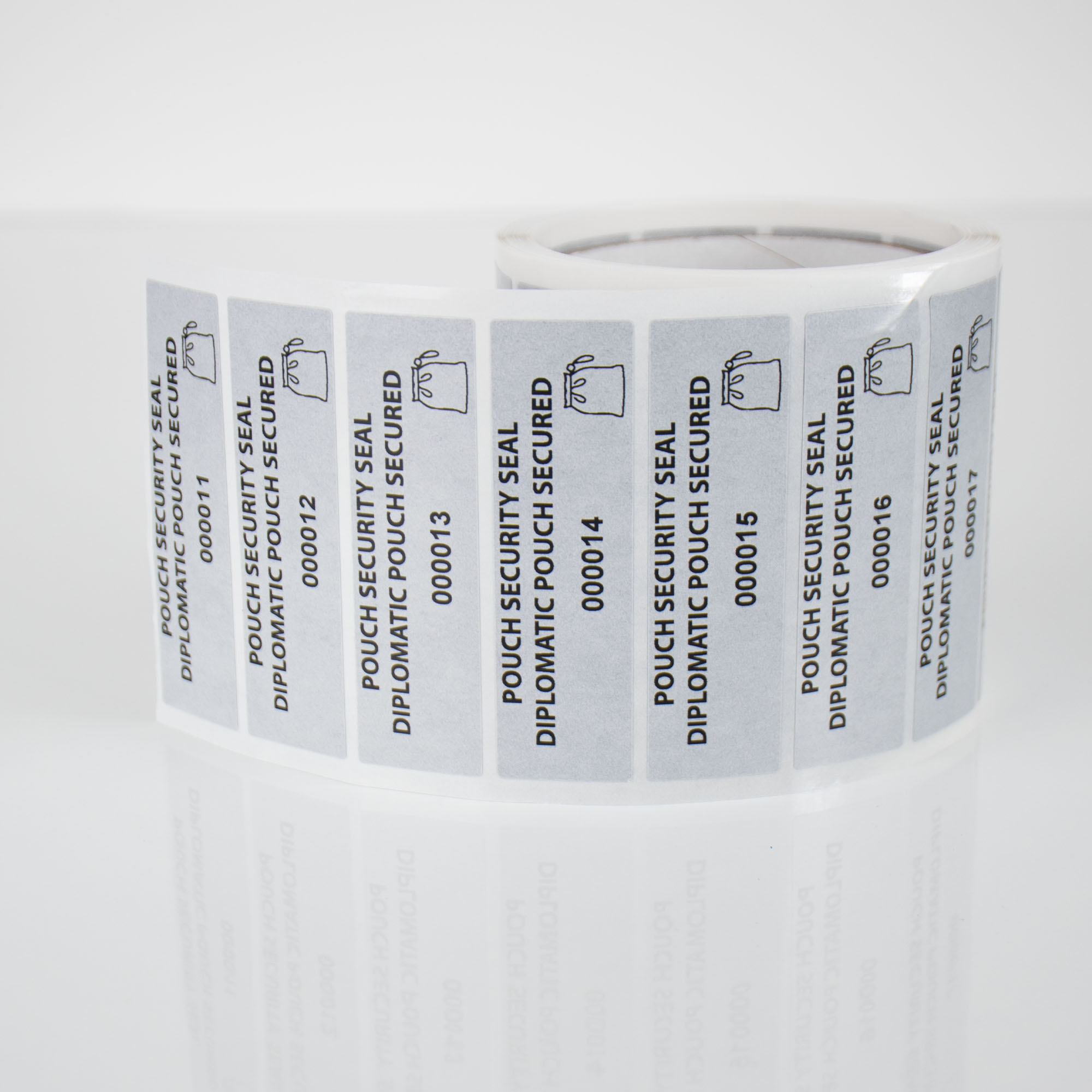
Diplomatic pouch security labels
A numbered seal applied at despatch and checked on receipt, so the question at handover is answered from the record rather than from memory: is this the same seal number, and is it undisturbed?
Non-residue construction keeps reusable pouches clean, and the seal number carries the chain of custody.

What happens when it is disturbed
Two controls, working together
The seal shows interference; the recorded number shows substitution. Neither alone is enough — a seal with no logged number can be replaced with a fresh one, and a logged number on an undisturbed-looking seal still needs a visual check. Specify both, and record both ends.


When to use it
- Reusable pouches and bags moving between offices, posts and couriers.
- Consignments with a defined handover point where a seal number can be signed for.
- Fabric, canvas and coated pouches that must not be marked by adhesive.
- Confidential document and media transfers within a controlled courier chain.
- Any route where you need to know at which leg integrity was lost.
When not to use it
- As a barrier. A pouch can be cut; the seal reports interference, it does not resist it.
- Without a numbering log. An unrecorded seal can be replaced with an identical one.
- As proof of contents. The seal evidences opening, not what is inside.
- On surfaces that shed fibre or silicone finishes without a substrate trial.
- Where a one-time-use security bag is the more appropriate format.
Choosing
Which tamper behaviour suits the workflow?
| Non-residue (recommended for reusable pouches) | Voids clearly, then removes cleanly so the pouch stays serviceable. The control is the unique numbered seal and its record at both ends. |
|---|---|
| Permanent | Leaves the security message on the surface. Persistent evidence, but marks the pouch — suited to single-use outer packaging. |
| Hybrid (rub-off) | Evidences opening but can be removed for re-use, so it is weaker for external chain of custody. |
| Seal plus tape | For larger consignments, seal the closure and run tamper-evident tape across the seam so both the opening and the seam are covered. |
What to specify when you order
| Construction | Non-residue tamper-evident label with security cuts and void message. |
|---|---|
| Transfer behaviour | Surface stays clean on removal; evidence and number stay on the seal. |
| Numbering | Sequential numbers, barcodes or QR codes, plus a write-on panel where a courier signs at handover. |
| Surface | Pouch material and finish — canvas, coated nylon, leather, PVC or board. |
| Size | Long enough to bridge the closure or zip pull with margin either side. |
| Environment | Temperature range, humidity and handling through the courier chain. |
| Records | How seal numbers are captured at despatch and receipt — the seal is only as strong as the log. |
What to test before you commit
01
Your pouch material
Apply and remove on the actual fabric or coating and check for lift and residue.
02
Closure geometry
Confirm the seal spans the only route in, including zips and eyelets.
03
Determined removal
Attempt a slow warm peel and confirm the void still appears.
04
Full route
Send a sealed pouch through a live journey and inspect at every handover.
05
Number capture
Check the despatch and receipt records reconcile without manual chasing.
06
Re-use cycles
Seal and unseal the same pouch repeatedly and check the fabric stays clean.
Where this goes next
- Government security overviewSeals for controlled and official movements.
- Election voting box sealsNumbered seals for ballot boxes and transport.
- Evidence pouch labelsChain-of-custody sealing for evidence handling.
- Tamper evident label rangeNon-residue, permanent and paper constructions.
Send us the pack
Send the pouch and the closure
Send a pouch, tell us the route and how seal numbers are recorded, and we will specify a seal that voids clearly and leaves the fabric clean.
Talk it through
Discuss your requirement
Sizes, numbering, write-on panels, volumes and lead times. UK manufacture, UK technical support.