
OEM and industrial

Tamper-evident labels for tool trolleys

Tool trolleys, hire crates and maintenance cabinets are moved between people and sites. A tamper-evident label shows at a glance whether drawers, lids or compartments have been opened since the last authorised check.

Send us the trolley and we will specify a label that sticks, voids cleanly and leaves the surface intact when it is removed.
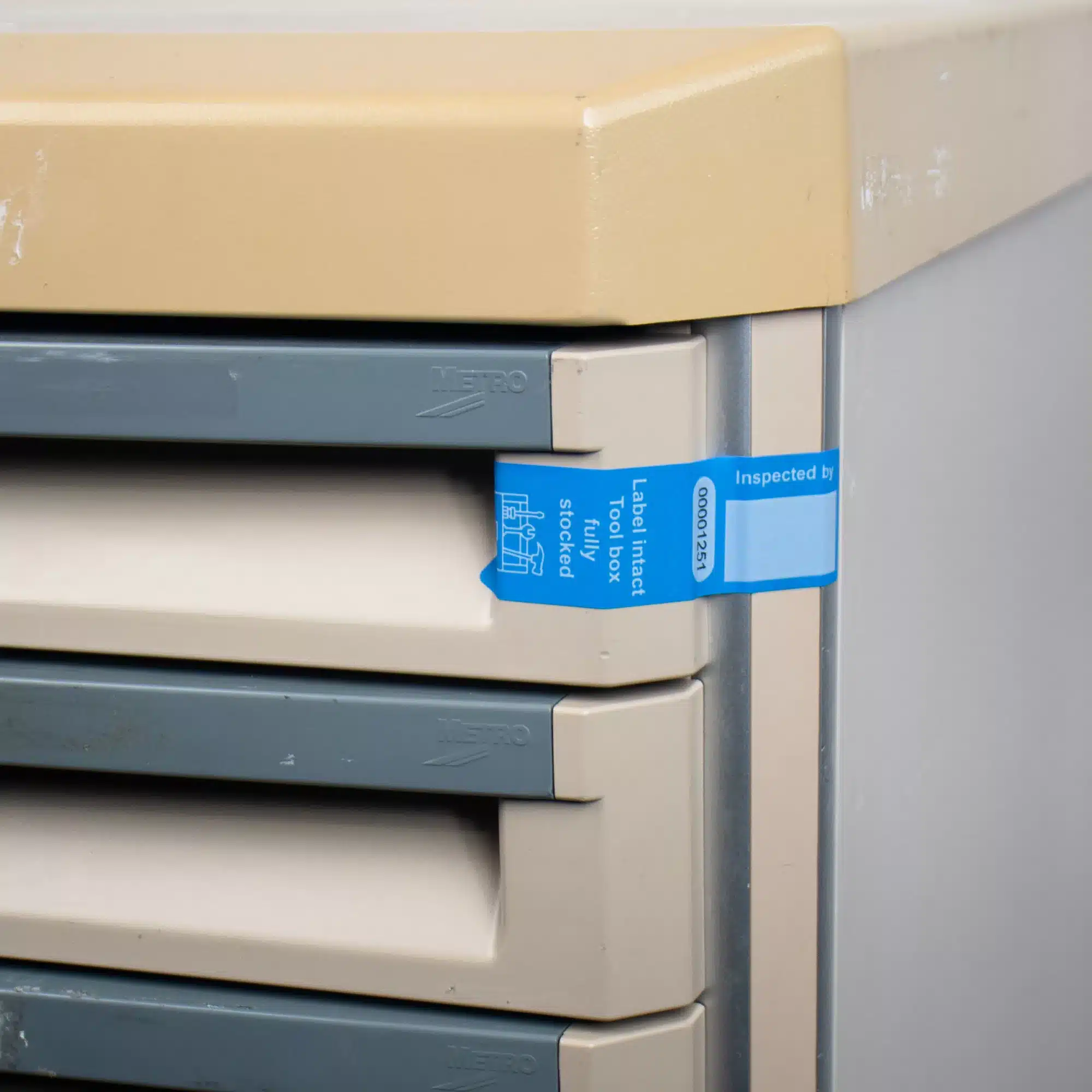
Tamper-evident security label on a tool trolley

What happens when it is disturbed

Security cuts and void evidence

The label does not lock the trolley. It makes any opening visible, so missing or swapped tools are noticed quickly rather than discovered days later.

Intact — a clean, numbered seal on a roll, ready for application to a painted tr
Intact — a clean, numbered seal on a roll, ready for application to a painted trolley or tool cabinet.
Applied — the label bridges the drawer or lid gap, so any opening is visible to
Applied — the label bridges the drawer or lid gap, so any opening is visible to the next user.
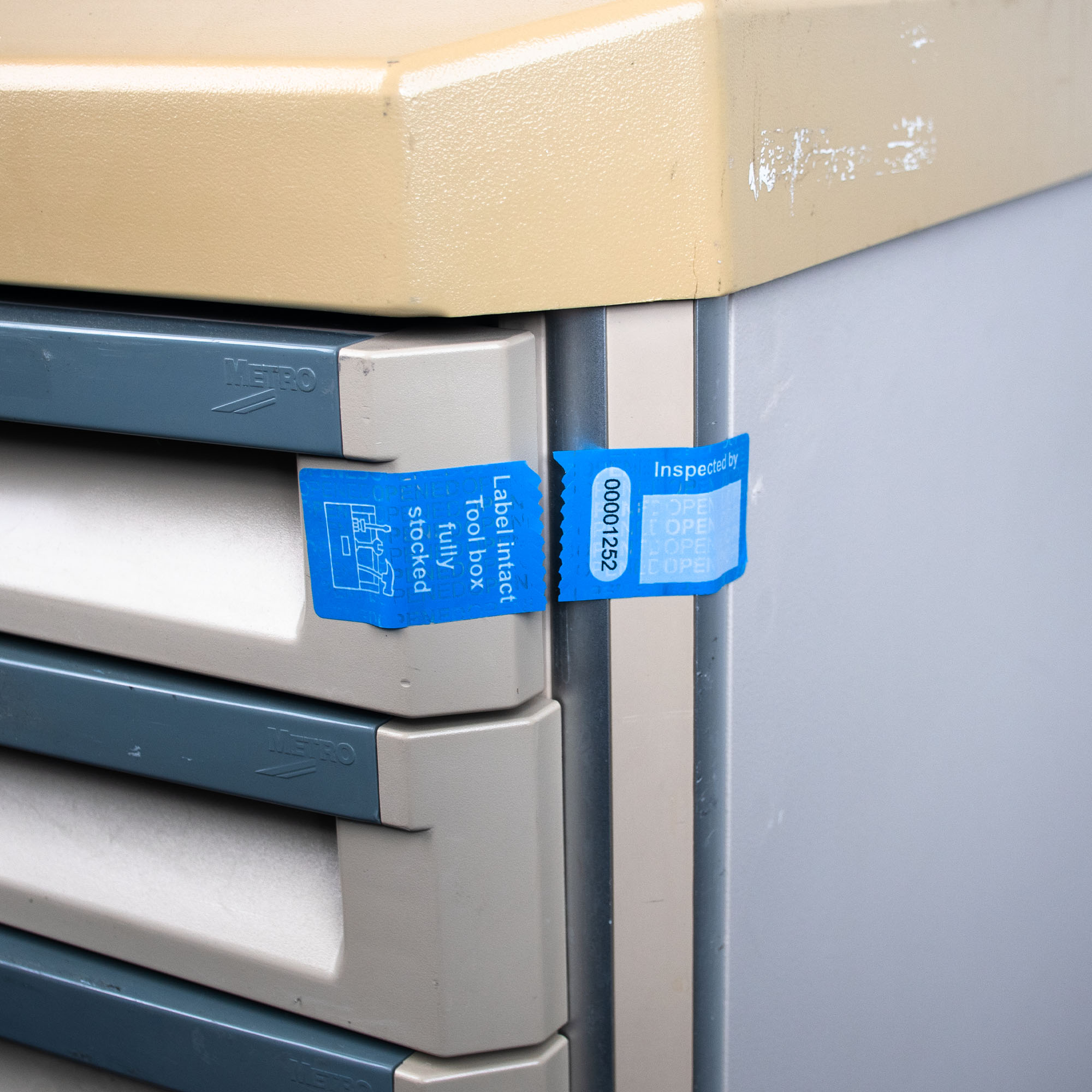
Evidence — security cuts break and the void message appears if the label is lift
Evidence — security cuts break and the void message appears if the label is lifted or disturbed.

When to use it

  • Tool hire trolleys and kits checked between customers.
  • Maintenance cabinets where calibrated tools must not be disturbed.
  • Workshop trolleys shared across shifts or trades.
  • Field service cases and spare-part containers.
  • Any painted or powder-coated metal surface where residue-free removal matters.

When not to use it

  • As a theft prevention device. A determined thief can remove or replace a label; it is evidence, not a lock.
  • As proof that the contents are genuine. That is authentication, which needs a different control.
  • On oily, dusty or heavily textured surfaces without cleaning and testing.
  • Where the label is exposed to high-pressure cleaning or solvents without a suitable material.

Specification

What to specify when you order

ConstructionNon-residue tamper-evident label with security cuts, so the label is destroyed on removal and the surface stays clean.
FormatRoll labels for hand application, or sheeted if you kit them per trolley.
SizeMatched to the gap or surface area — common sizes from small drawer seals to large lid seals.
SurfacePainted steel, powder coat, aluminium, stainless steel or plastic — tell us the substrate for the correct adhesive.
NumberingSequential numbers or barcodes so each seal can be logged to a trolley or check record.
BrandingCompany colour, warning wording or a space to write the date and checker initials.
EnvironmentIndoor workshop, outdoor site, chilled transport, or wash-down area — each needs a different material.

What to test before you commit

01

Your surface

Test on the actual painted or metal trolley, clean and dirty, to check adhesion and clean removal.

02

Handling stress

Move the trolley through a normal shift. The seal must not lift at the corners or curl.

03

Void clarity

Show the intact and voided label to a non-expert. The security cuts and void message must be obvious.

04

Residue check

Remove the label after the expected service life. Confirm the surface is clean enough for your standard.

05

Numbering workflow

Check that the sequence and record-keeping fit how trolleys are logged at handover.

06

Reapplication check

Try to re-stick a removed label. A non-residue construction should not be reusable.

Where this goes next

Send us the pack

Let us specify it against your trolley

Send the trolley surface or a swatch and tell us the use cycle, cleaning routine and where the label is applied. We will specify a construction that fits.

Talk it through

Discuss your requirement

Materials, sizes, numbering, colours, volumes and lead times. UK manufacture, UK technical support.