
Evidence integrity application
Room Secure Labels
Sealing doors, hatches and cabinets so that entry to a secured room or scene is visible without a physical lock.
A room cannot always be locked, and a lock does not record who went in. A non-residue label bridging the door and frame breaks on opening and leaves a message, giving a visible, dated record that the space has not been entered since it was sealed.
What needs to happen if the door is opened
Sealed space, visible entry
This is a detection control, not access control. It tells you an unrecorded entry happened, and when.
01
Sealed and signed
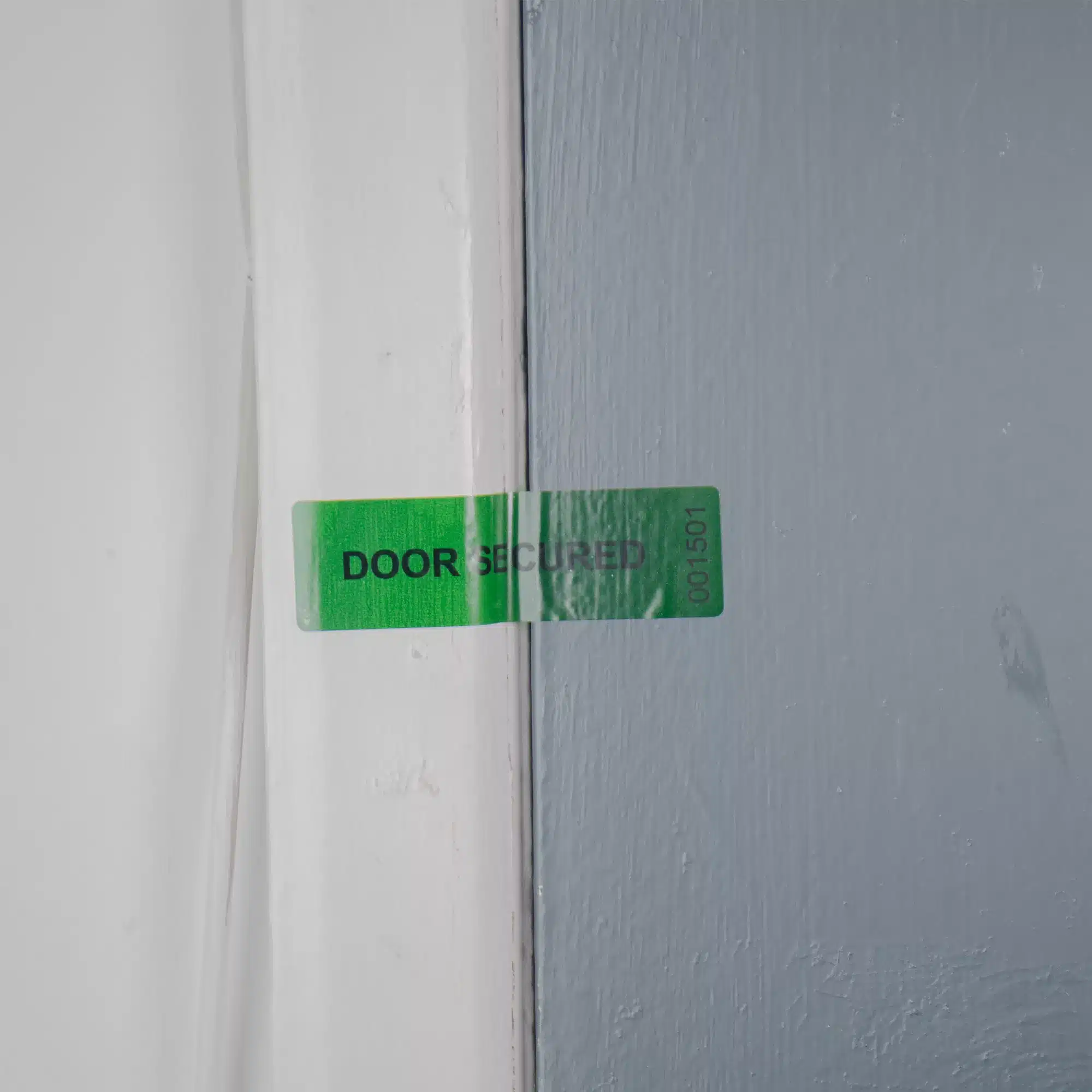
The label bridges the door and frame, and is signed and dated by the person sealing the room.
02
Door opened
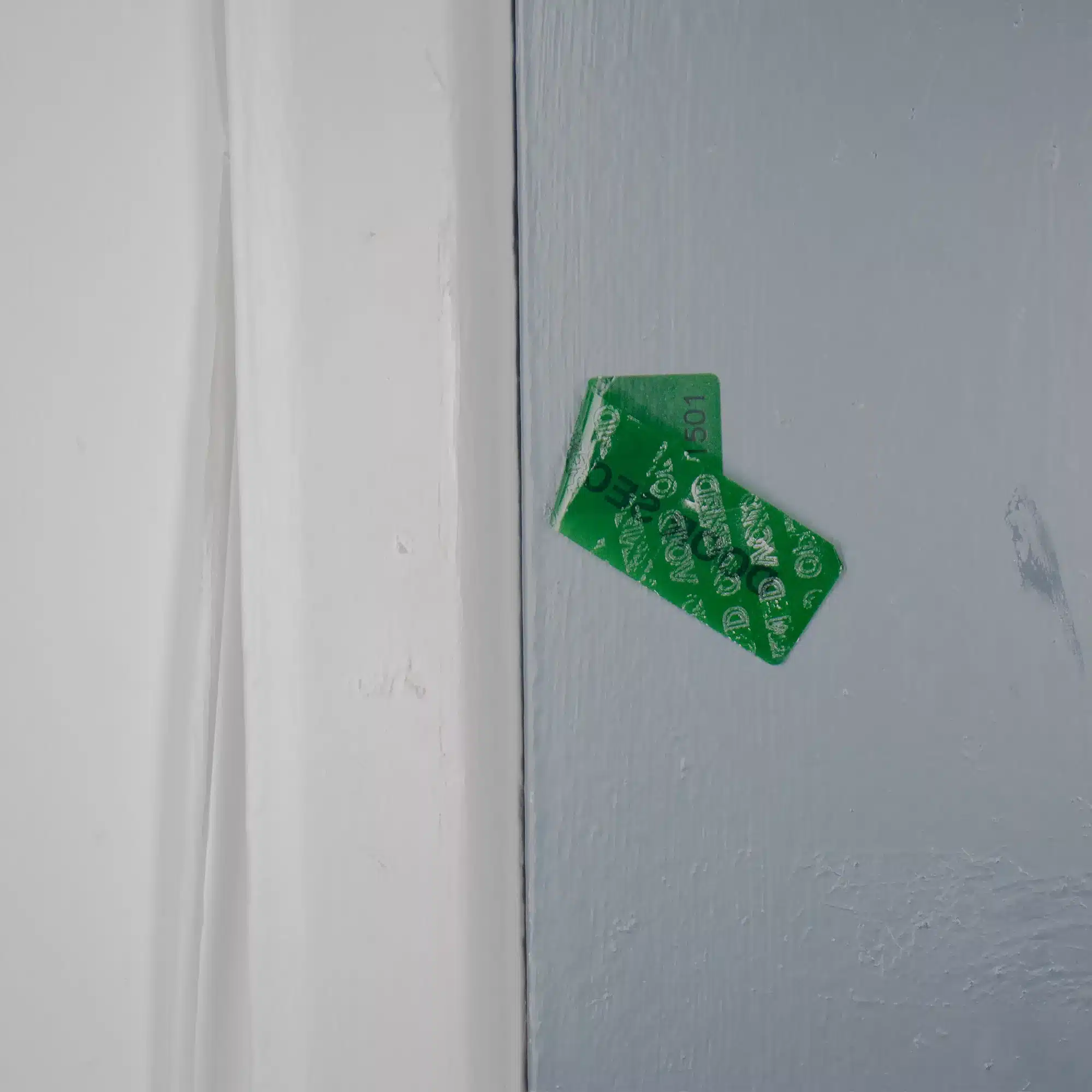
Opening the door breaks the label along its security cuts, or separates the printed layer.
03
Evidence remains
A security message appears, the broken seal cannot be rejoined, and no adhesive is left on the door finish.
Tamper behaviour
Intact, interfered with, evidence
A Door Secure label bridging a door and frame, during removal, and the message left behind.


Security approach
Constructions used for doors and secured spaces
Non-residue labels
Reveals the message on removal and leaves painted, laminated or glazed door finishes clean.
Security cuts
Cuts through the face material make the label break on opening rather than stretch with the door.
Numbering and signature panels
A consecutive number plus a signed and dated panel records who sealed the space and when.
See non-residue labels for the construction, or the full tamper evident label range.
Application & integration
How these labels are applied
Position across the gap
The seal must bridge the moving edge. On double doors and hatches that means more than one seal.
Door finish
Paint, powder coat, veneer and glass all release differently. Finishes should be tested before a construction is fixed.
Environment
Corridors, external doors and cold stores vary in temperature and humidity, which affects both bond and clean removal.
Useful guidance
Before you specify
A sealed door is only useful if the seal number and time are recorded. This guide covers how to keep that record intact.
Related reading
- How to protect evidence →Practical notes on sealing, numbering and recording items so integrity can be shown later.
Next step
Door and room sealing
Known requirement
You know the door types, finishes and volumes and want samples or a quotation.
Not sure which construction will work?
Tell us the door finishes and conditions, or send a sample panel. We will confirm a construction that holds and lifts cleanly.